

Principales conclusiones
|
Floating uncontrollably, breathing too fast, forgetting to check the air supply, or panicking during descent, these are some of the most common struggles beginner divers face during their first few dives. Many new divers are surprised by how different breathing, movement, and communication feel underwater compared to being on land.
Spazzmonki, a Redditor, talked about his first scuba experience in Koh Tao, and shared how panic and heavy breathing made it impossible to stay underwater comfortably during a try dive session. Despite proper instruction, they struggled with buoyancy, felt overwhelmed underwater, and eventually stayed behind on the boat while others completed the dive.
Experiences like this highlight why understanding beginner scuba diving mistakes before entering the water is so important. Most of these problems happen because new divers are still adapting to an entirely different environment. With proper guidance and awareness, these early struggles become much easier to manage.
15+ Most Common Mistakes A Beginner Can Make While Scuba Diving
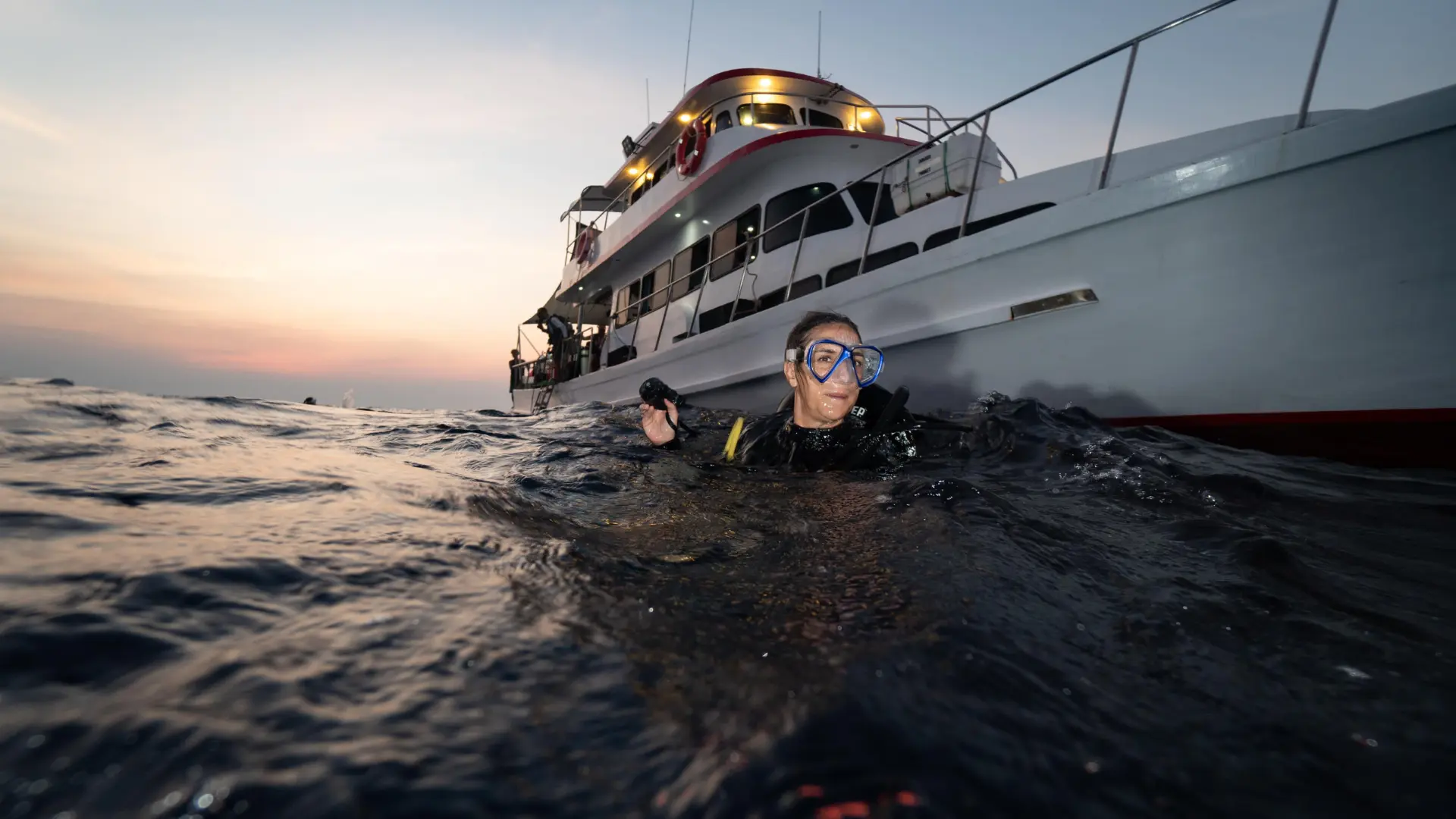
Below are the most common beginner scuba diving mistakes, why they happen, and the real consequences they can create underwater.
Pre-Dive Mistakes
1. Skipping the Buddy Check
The buddy check is a pre-dive safety routine where divers inspect each other’s equipment before entering the water. Many beginners rush through this process or skip parts of it entirely because they are excited to start the dive. The BWRAF check includes reviewing the BCD, weights, releases, air supply, and final equipment setup.
- Why It Happens
Beginners are often excited, distracted, or assume the instructor has already checked everything.
- Real Consequences
Loose tank straps, disconnected inflators, or closed air valves can create serious underwater emergencies.
2. Not Equalizing Early Enough
Equalizing helps balance pressure inside the ears during descent. Many first-time divers wait until they already feel discomfort before attempting to equalize. Underwater pressure increases quickly, especially during the first few meters of descent, making this one of the most common beginner diver mistakes to avoid.
- Why It Happens
Many new divers underestimate how quickly pressure changes underwater.
- Real Consequences
Ear barotrauma, pain, dizziness, and even ruptured eardrums.
3. Overweighting or Underweighting
Buoyancy underwater depends heavily on proper weighting. Beginner divers often wear too much weight because they fear not being able to descend, while others use too little weight and struggle to stay underwater comfortably. Both situations affect overall dive control and breathing efficiency.
- Why It Happens
Beginners are unfamiliar with buoyancy and often rely entirely on guesswork.
- Real Consequences
Poor buoyancy control, rapid air consumption, and exhausting dives.
4. Ignoring the Dive Briefing
Dive briefings provide important information about the dive site, underwater conditions, entry and exit points, communication signals, currents, and safety procedures. Some beginners stop paying attention because they feel nervous, overly confident, or distracted by the excitement of the dive.
- Why It Happens
Excitement or overconfidence causes divers to tune out important details.
- Real Consequences
Confusion underwater, navigation issues, and unsafe reactions to currents or marine life.
Underwater Mistakes
5. Poor Buoyancy Control
Buoyancy control refers to staying neutrally balanced underwater without constantly floating upward or sinking downward. Many beginner divers struggle to control their position because buoyancy depends on breathing, body posture, weights, and BCD adjustments, all working together at the same time.
- Why It Happens
New divers struggle to coordinate breathing, weights, and BCD adjustments.
- Real Consequences
Damaged coral reefs, rapid air loss, and increased panic. Poor buoyancy control is considered one of the most common scuba diving mistakes among beginner divers worldwide.
6. Incorrect Breathing Technique
Breathing underwater feels unusual at first because scuba equipment delivers compressed air differently from normal breathing on land. Some beginners breathe too rapidly due to anxiety, while others accidentally hold their breath without realizing it during movement or ascent.
- Why It Happens
Anxiety and unfamiliar underwater sensations.
- Real Consequences
Increased stress, reduced air supply, and risk of lung over-expansion injury.
7. Incorrect Kicking Technique
Many beginners naturally use a bicycle-style kick underwater with bent knees and fast movements. While this feels familiar, it is inefficient underwater and often causes poor balance, unnecessary energy use, and accidental contact with reefs or sand.
- Why It Happens
Beginners instinctively move underwater the same way they swim on the surface.
- Real Consequences
Poor control, disturbed visibility, and reef damage.
8. Touching Marine Life or the Reef
Beginner divers are often tempted to touch coral reefs, fish, turtles, or other marine creatures out of curiosity or excitement. Some divers also accidentally touch the reef because of poor buoyancy control or unstable fin movements near the ocean floor.
- Why It Happens
Curiosity and lack of environmental awareness.
- Real Consequences
Coral damage, cuts, stings, and harm to marine ecosystems.
9. Ascending Too Fast
Ascending too quickly means rising toward the surface faster than the recommended safe ascent rate. Beginners sometimes ascend rapidly due to panic, excitement, or poor buoyancy management without realizing how dangerous sudden pressure changes can be for the body.
- Why It Happens
Panic, excitement, or poor buoyancy control.
- Real Consequences
Increased risk of decompression sickness and lung injuries.
10. Not Monitoring Air Supply
New divers sometimes become so focused on marine life, photography, or managing buoyancy that they forget to regularly check their pressure gauge. Air awareness is one of the most important safety habits in scuba diving and should become automatic during every dive.
- Why It Happens
Beginners become distracted by marine life or buoyancy issues.
- Real Consequences
Low-air emergencies underwater. This remains one of the most dangerous mistakes beginner divers make.
11. Panic Underwater
Panic underwater usually begins with a small issue, such as mask flooding, equalization discomfort, losing sight of a buddy, or feeling out of control. Instead of stopping calmly, beginner divers may react emotionally and make rushed decisions.
- Why It Happens
Fear, stress, or sensory overload.
- Real Consequences
Rapid breathing, poor decisions, and unsafe ascents.
What to do when panic starts? Use the “STOP method”.
Most panic situations resolve quickly once the diver stops moving and focuses on slow, controlled breathing. |
12. Poor Mask Clearing Technique
Mask clearing is a basic scuba skill used to remove water from inside the mask while underwater. Many first-time divers feel uncomfortable when water enters the mask because the sensation feels unnatural and temporarily affects visibility.
- Why It Happens
Mask flooding feels unnatural for first-time divers.
- Real Consequences
Stress and panic underwater.
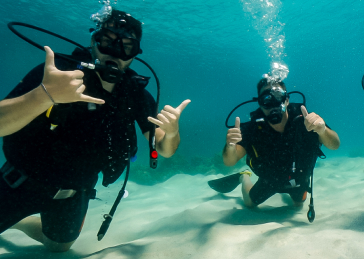
13. Forgetting Hand Signals
Underwater communication relies entirely on hand signals. Forgetting or confusing signals can lead to misunderstandings between buddies or with the instructor, especially in moments where a quick response matters.
The five most important signals every beginner should know:
Signal | Meaning |
Thumb up | Going up / end the dive |
Thumb down | Going down / descending |
Flat hand rocking side to side | Something is wrong / not okay |
OK sign (circle with fingers) | Everything is fine |
Slicing hand across throat | Out of air/emergency |
Take Note: Check out this blog if you want to know more about underwater communication hand signs: https://lbdivingkohtao.com/10-scuba-diving-signals-every-diver-should-know/
Post-Dive Mistakes
14. Flying Too Soon After Diving
Flying shortly after scuba diving exposes the body to additional pressure changes before excess nitrogen has fully left the bloodstream. Many beginner divers underestimate how important surface intervals are after diving, especially while traveling.
- Why It Happens
Travel schedules and a lack of awareness.
- Real Consequences
Higher risk of decompression sickness.
15. Not Logging Dives
Dive logging involves recording important details such as dive depth, duration, conditions, equipment used, and personal observations. Some beginners skip logging because they think it is unnecessary or only for professional divers.
- Why It Happens
Beginners underestimate their value.
- Real Consequences
Missed learning opportunities and poor skill tracking.
16. Neglecting Equipment Care
Scuba equipment is constantly exposed to saltwater, sand, moisture, and sunlight. Beginner divers sometimes leave gear unwashed or improperly stored after diving without realizing how quickly these conditions can damage expensive equipment.
- Why It Happens
Inexperience and post-dive fatigue.
- Real Consequences
Saltwater corrosion and expensive equipment damage.
General Mindset Mistakes
17. Overconfidence After Certification
Many new divers feel highly confident immediately after completing their Open Water certification. While certification provides important foundational skills, it does not mean a diver has mastered all underwater conditions or emergencies.
- Why It Happens
New divers often gain confidence quickly after passing the course.
- Real Consequences
Taking unnecessary risks beyond one’s experience level.
18. Diving Beyond Training Level
Some beginner divers attempt deep dives, strong-current dives, wreck dives, or cave environments before receiving proper advanced training. This often happens because they want more excitement or feel pressured by experienced divers around them.
- Why It Happens
Peer pressure or excitement.
- Real Consequences
Increased risk in deep, wreck, or strong-current dives.
19. Infrequent Diving Practice
Scuba diving skills improve with consistency and repetition. Long gaps between dives can reduce confidence, buoyancy control, air management, and emergency response skills, especially for newly certified divers.
- Why It Happens
Travel limitations or lack of opportunities.
- Real Consequences
Skill deterioration and reduced confidence.
How Long Does It Take To Feel Comfortable Underwater?
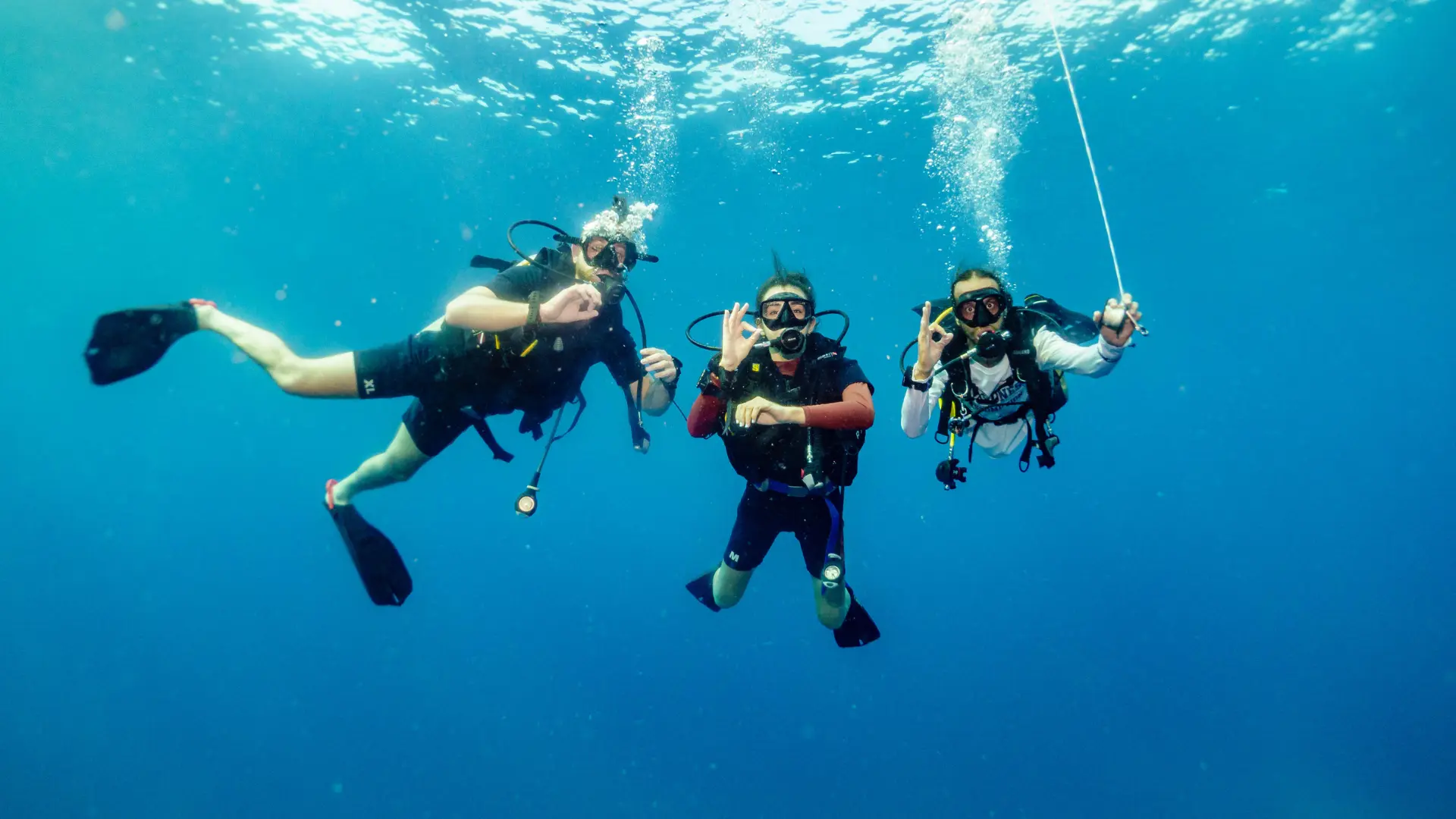
This is different for every diver, but most people begin to feel genuinely relaxed and in control somewhere between their 5th and 15th dive. Here is a rough guide:
Dive Range | What Most Divers Experience |
Dives 1–3 | Adjustment period. Breathing feels strange. Buoyancy is difficult. |
Dives 4–10 | Breathing becomes more natural. Buoyancy starts to improve. |
Dives 10–20 | Movement feels controlled. Air consumption improves significantly. |
Dives 20+ | Skills become instinctive. Diving starts to feel genuinely enjoyable. |
The most important thing is not to judge yourself after your first dive. Almost every experienced diver has a story about struggling underwater when they first started.
Nervous vs. Confident Diver: What Changes
Nervous Beginner | Confident Diver |
Breathes rapidly and shallowly | Breathes slowly and steadily |
Over-inflates the BCD to stay up | Maintains buoyancy through breath control |
Looks down at the reef constantly | Scans the water column and surroundings |
Grabs or kicks the reef accidentally | Moves with deliberate, controlled fin kicks |
Forgets to check the gauge | Checks the air supply every few minutes |
Panics when the mask floods | Clears the mask calmly without stopping |
DID YOU KNOW?The golden rule of scuba diving is simple: “Never hold your breath underwater”. As divers ascend, air inside the lungs expands because of the changing pressure. Holding your breath during ascent can cause serious lung over-expansion injuries. Another important safety rule is to equalize early and frequently during descent instead of waiting until pain begins. Many first-time scuba diving mistakes happen because divers panic, rush their movements, or ignore their comfort level underwater. Calm breathing and controlled movements are some of the most important habits beginner divers can develop. |
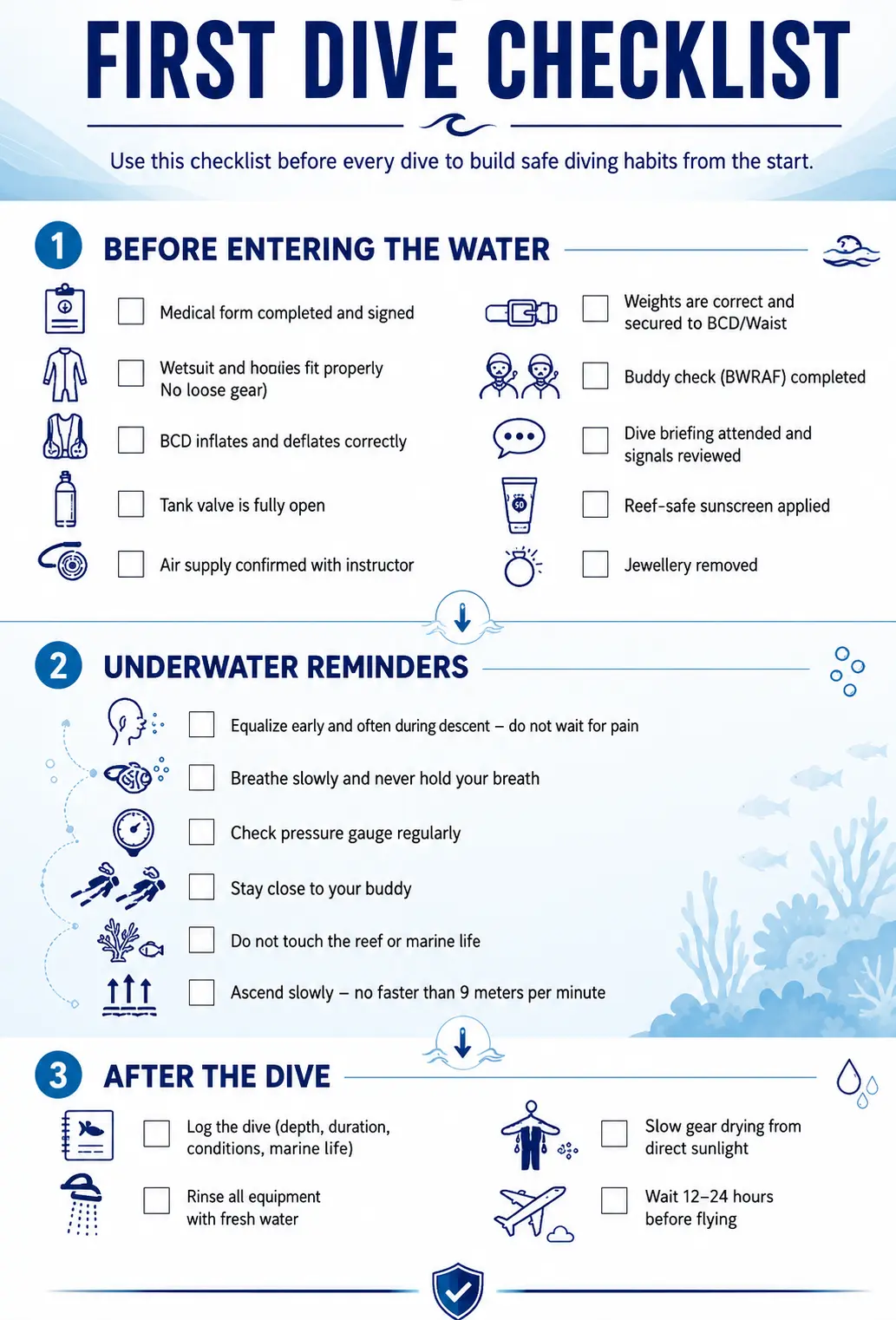
A Quick First-Time Scuba Diving Checklist
Final Thought
Making mistakes as a beginner scuba diver is completely normal, especially when learning to adapt to an entirely new underwater environment. Most common scuba diving mistakes happen because new divers are still developing confidence, buoyancy control, breathing habits, and overall awareness underwater. With proper training, calm decision-making, and regular practice, these mistakes become much easier to manage and avoid over time.
Scuba diving should always feel safe, controlled, and enjoyable rather than rushed or stressful. Learning with experienced instructors in beginner-friendly conditions can make a huge difference in both safety and confidence.
If you are planning to start diving in Koh Tao, the team at Buceo en La Bombona provides supportive training designed to help beginners feel comfortable, prepared, and confident from their very first dive experience.
Preguntas frecuentes
 ES
ES  EN
EN