

ResumenKoh Tao issues more scuba certifications annually than almost anywhere else in the world, second only to Cairns, Australia. This expert guide covers everything a diver needs to plan their trip in 2026: seasonal diving conditions with visibility and temperature data, the top dive sites by experience level, when and where to see whale sharks, how to choose the right dive school, what the RAID Open Water course actually involves, and the essential safety principles every new diver should know before entering the water. |
The best open water diving in Koh Tao starts with understanding how this small island became one of the world’s most reliable training and dive destinations. Whether you are planning your first certification or building on existing experience, Koh Tao offers a rare balance of calm conditions, consistent visibility, and a high concentration of professional dive schools.
Its evolution from a quiet island into Thailand’s diving hub explains why it continues to attract divers at every level. With accessible sites, structured training pathways, and diverse marine life, Koh Tao is not just easy to dive; it is designed for progression, making every dive part of a well-supported journey.
Understanding Koh Tao’s evolution helps explain why it consistently ranks among the world’s top diving destinations.
Why Koh Tao is a Global Diving Destination
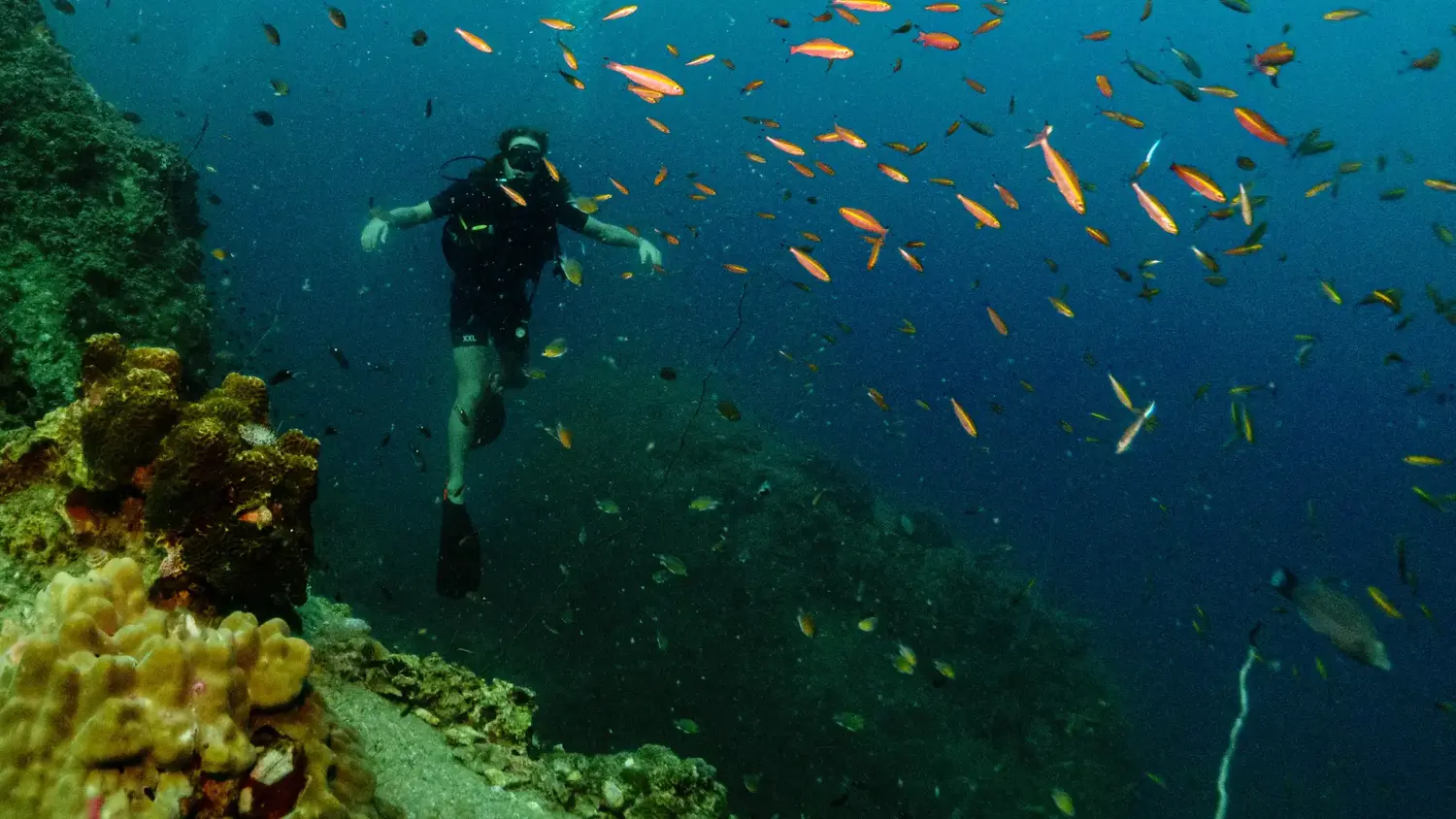
Koh Tao sits within the Chumphon Archipelago on the western edge of the Gulf of Thailand. Despite covering just 21 square kilometres, the island punches well above its weight as a diving destination for reasons that go beyond the scenery:
- Year-round warmth — Water temperatures sit between 26 and 30°C throughout the calendar, making every month diveable without a heavy wetsuit
- Reliable visibility — Even outside peak season, visibility rarely drops below 10 metres, and frequently exceeds 25 metres from March through to October
- Accessible dive sites — All major sites are reachable within a short boat journey, with the longest trips to outlying pinnacles taking around 50 minutes
- Certification value — Open Water courses on Koh Tao are priced competitively without compromising on standards, making it one of the most cost-effective places in the world to get certified
- Progressive diving — The range of sites covers every level, meaning you can complete your Open Water course and progress to Advanced, Rescue, and beyond without leaving the island
- Marine biodiversity — Turtles, barracuda, stingrays, reef sharks, moray eels, and seasonal whale sharks all share the same reefs, making every dive genuinely unpredictable in the best possible way
Diving Conditions in Koh Tao for the Best Open Water Diving Experience
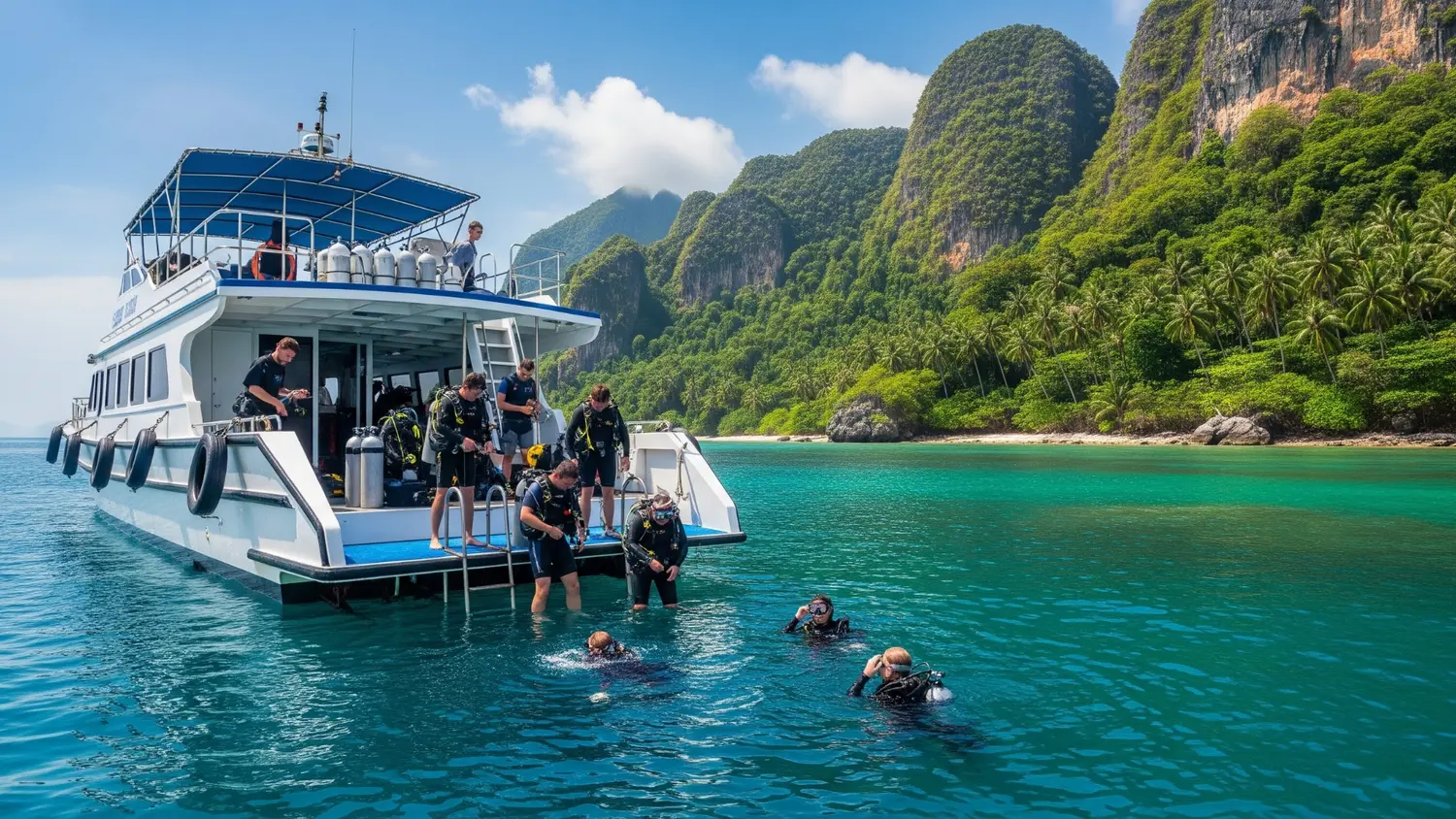
Understanding the seasons before you book is one of the most practical things you can do. The island is influenced by two monsoon cycles, and each shapes the diving experience in different ways.
Season | Months | Visibility | Water Temp | Conditions | Best For |
Peak dry season | March to May | 20 to 30 metres | 29 to 30°C | Calm and flat | Whale sharks, beginners, photography |
South west wind | June to September | 15 to 25 metres | 28 to 29°C | Choppier west coast; east coast calm | Advanced sites, East Coast diving |
Best visibility | September to October | 25 to 40 metres | 28 to 29°C | Settling and calm | Photography, fun dives, quieter island |
North east monsoon | November to January | 10 to 20 metres | 26 to 28°C | Variable, occasionally rough | Budget travel, flexible schedules |
Post monsoon | February | 20 to 30 metres | 27 to 28°C | Increasingly settled | Relaxed diving, photography |
What each season actually means for your trip:
- March to May is peak season for a reason. Seas are flat, visibility peaks, and this is the primary whale shark window driven by plankton blooms in warming water. The island is at its liveliest but also its most competitive for boat space
- June to September brings south west winds that push operators to east coast sites, which stay calm and clear throughout. Whale sharks are still occasionally sighted, and visibility holds well
- September to October is arguably the finest diving of the year for those with flexibility. The wind drops, crowds thin, and visibility can reach extraordinary levels, at times exceeding 30 metres at depth
- November to January is the northeast monsoon. Conditions are unpredictable, but Koh Tao’s sheltered position means diving is rarely cancelled entirely. Operators simply adjust their site selection to what the sea allows
- February marks the return of reliability. Visibility climbs, seas settle, and the island transitions quietly into peak season ahead
Top Dive Sites for the Best Open Water Diving Experience
Dive Site | Depth | Level | Marine Life Highlights |
Japanese Gardens | 6 to 15 metres | Beginner | Eagle rays, sea turtles, and coral diversity |
Mango Bay | 2 to 15 metres | Beginner | Sandy slopes, coral gardens, ideal for first dives |
Gemelos | 6 to 18 metres | Beginner to Intermediate | Blue spotted stingrays, clownfish, and excellent night diving |
White Rock | 8 to 22 metres | Intermediate | Pinnacles, coral overhangs, and diverse reef fish |
Roca Verde | 10 to 25 metres | Intermediate | Swim throughs, boulders, and strong fish life |
Chumphon Pinnacle | 14 to 40 metres | Avanzado | Barracuda schools, trevally, and occasional whale sharks |
Sail Rock | 5 to 40 metres | Intermediate to Advanced | Vertical chimney, dense marine life, prime whale shark territory |
HTMS Sattakut | 20 to 30 metres | Avanzado | Deliberately sunk naval wreck, colonised by marine life |
By experience level, here is where to focus:
Beginners:
- Japanese Gardens and Mango Bay offer the most confidence-building conditions on the island
- Shallow depths, minimal current, and abundant reef life make early dives feel exciting rather than overwhelming
- Both sites are used throughout the Open Water course and regularly produce turtle and ray sightings from the very first dive
Intermediate divers:
- White Rock and Twins deliver variety and consistent marine life on every visit
- Twins is one of the best night dive sites on the island, rewarding divers who slow down and look carefully at the reef structure
- Green Rock’s network of swim-throughs adds a navigational element that makes it a strong choice for divers building confidence at depth
Advanced divers:
- Chumphon Pinnacle is the benchmark dive on Koh Tao and one of the finest advanced sites in the Gulf of Thailand
- The 40 metre descent along granite towers covered in anemones, surrounded by circling barracuda and trevally, is the kind of dive that stays with you
- The HTMS Sattakut wreck adds a distinctive alternative, with the naval vessel now thoroughly colonised by reef life throughout its structure
Choosing the Right Dive School in Koh Tao
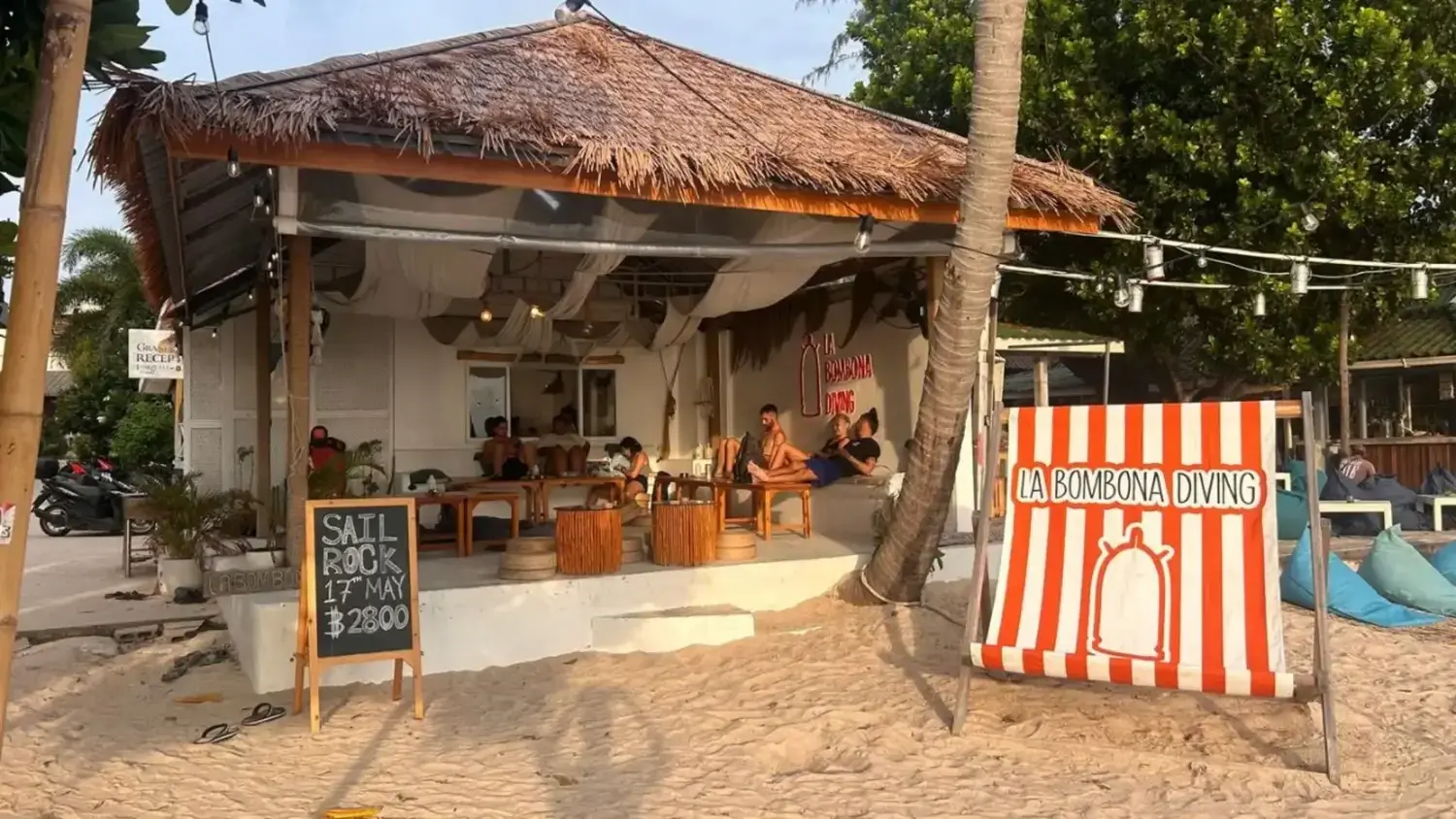
With over 50 dive schools operating on an island you can cross in under an hour, the choice can feel overwhelming. The honest truth is that the quality of your Open Water experience depends far less on which certification agency you choose and far more on the school you walk through the door of on day one.
These are the criteria that actually matter:
- Instructor-to-student ratio — Smaller groups mean more time with your instructor underwater, more individual feedback after each dive, and a safer overall experience. A ratio of one instructor to four students is the standard worth looking for
- Instructor experience — Years of teaching on Koh Tao specifically matter. Instructors who know the local sites, the currents, and the conditions make better decisions for their students
- Equipment condition — Ask directly how frequently equipment is serviced. Regulators, BCDs, and dive computers should be maintained on a regular schedule, not replaced only when they fail
- Certification depth — Most schools on Koh Tao certify to 18 metres. A small number certify to 20 metres, which opens up a broader range of sites immediately after qualifying
- Safety record and protocols — A reputable school will be transparent about their emergency procedures, their links to the nearest hyperbaric chamber, and how they handle medical assessments before students enter the water
- Environmental responsibility — Schools that integrate conservación marina into their teaching produce divers who understand what they are looking at and why it is worth protecting
Expert tip: En Reef World Foundation’s 2025 Impact Report confirmed that dive operators following the Green Fins code of conduct reduced environmental threats by 26%. When shortlisting dive schools on Koh Tao, asking whether they follow Green Fins standards is a quick and reliable indicator of how seriously they take both safety and conservation. |
The schools worth considering are those willing to answer all of the above questions directly, without deflecting to price or promotional claims.
RAID Open Water: What the Course Actually Involves
The RAID Open Water certification is a modern, skills-focused qualification that prepares divers to explore dive sites to 20 metres independently worldwide. Unlike older certification models that prioritise getting students through quickly, RAID places deliberate emphasis on buoyancy, situational awareness, and environmental understanding from the very first session.
The course runs across approximately three and a half days:
Day | Time | What Happens |
Día 1 | From 16:00 | Meet your instructor and fellow students, complete paperwork, introduction to the RAID online theory system, and a fundamental dive equipment |
Día 2 | From 08:00 | Classroom academics covering dive physics, equipment operation, and safety principles, followed by a full pool session practising mask clearing, buoyancy control, and emergency procedures |
Día 3 | From 08:00 | First two open water dives at genuine reef sites, applying pool skills in a real environment, with instructor feedback after each dive |
Día 4 | From 07:00 | Final two deeper open water dives, completing all required skills, finishing around 11:00 as a certified diver |
What certification to 20 metres means in practice:
- Access to the majority of Koh Tao’s dive sites immediately after qualifying, including Twins, White Rock, and Green Rock
- A recognised qualification accepted by dive operators worldwide, with no additional steps required
- The foundation for progression directly into Explorer 30, Night Diving, and Rescue Diver courses without additional prerequisites
The depth advantage is practical rather than simply a number. Most of the genuinely interesting reef topography on Koh Tao sits between 15 and 20 metres, and being certified to that depth means you reach it on the very first fun dive after your course rather than working towards it later.
Essential Safety Principles for Open Water Divers
Diving safely is not complicated, but it does require consistent habits built from the very first session. These are the principles that matter most for new divers heading into Koh Tao’s water:
Before you enter the water:
- Complete your medical questionnaire honestly before beginning any course. Certain conditions require physician clearance before diving, and a good school will insist on this rather than waive it through
- Conduct a full buddy check before every dive, without exception. BCD inflation and deflation, regulator function, weight system, and computer settings should be confirmed each time, regardless of how familiar the equipment feels
- Attend your dive briefing actively. Knowing the site layout, the maximum depth, the planned duration, and the agreed signals before descending prevents the majority of avoidable problems
Underwater:
- Master buoyancy before worrying about anything else. Good buoyancy control protects the reef, conserves air, reduces fatigue, and makes every other skill easier to execute
- Keep your dive buddy in sight throughout the dive. Separation is the most common precursor to incidents, and maintaining proximity costs nothing
- Monitor your air continuously, not just when you remember to. The standard return pressure is 50 bar, and experienced divers begin their ascent well before this point rather than at it
- Never touch, chase, or attempt to ride marine life. Understanding local marine life behaviours before you dive makes encounters safer and more rewarding for both diver and animal
- Ascend slowly, always. A rate of no faster than 9 metres per minute and a 3-minute safety stop at 5 metres are standard practice on every dive
After the dive:
- Log every dive, including conditions, depth, duration, and any notable sightings. A well-maintained logbook is the record your future instructors and divemasters will use to assess your experience
- Rehydrate properly after each dive. Dehydration is a risk factor for decompression sickness that is entirely within your control
- Allow adequate surface intervals between dives. Follow your dive computer’s guidance rather than rushing back into the water
Safety insight: En Divers Alert Network advises drinking at least 500 ml of water before your first dive, as dehydration increases the risk of decompression sickness. |
The habits formed during an Open Water course tend to persist throughout a diver’s career. Instructors who emphasise these principles from day one, rather than rushing through them to reach the fun part, produce safer and more capable divers in the long run.
Experience the Best Open Water Diving Koh Tao with La Bombona DivingReady to begin your underwater adventure at Thailand’s premier diving destination? Buceo en La Bombona offers the best open-water diving experience on Koh Tao with expert instruction, modern equipment, and unmatched safety standards. ✓ RAID Open Water certification in just 4 days ✓ Small class sizes for personalised attention ✓ Modern, well-maintained diving equipment ✓ Access to Koh Tao’s premier dive sites ✓ Experienced multilingual instructors ✓ Comprehensive safety protocols and training ✓ Marine conservation education included ✓ Flexible scheduling to match your travel plans
Open Water Certification: ฿11,000 – Everything included for your complete diving journey Start Your Diving Adventure Today 4 ocean dives over 4 days | All equipment included | Worldwide certification recognised |
Preguntas frecuentes
 ES
ES  EN
EN