

Puntos principales
- Koh Tao alberga diversas especies de medusas, entre ellas la inofensiva Rhizostome y la más peligrosa Box.
- La mejor época para avistar medusas es durante la estación lluviosa, de noviembre a enero, cuando son más abundantes.
- Las medusas prefieren aguas cálidas y poco profundas, y suelen encontrarse cerca de las costas de Koh Tao.
- Los operadores de buceo siempre llevan vinagre en sus barcos para tratar las picaduras de medusa.
- They are not as dangerous as you may think, and they’re not too common around Koh Tao.
- Koh Tao has fewer confirmed box jellyfish incidents than nearby Koh Samui and Koh Phangan, despite its busy diving and snorkelling scene.
- No jellyfish is safe to touch, even if it is dead or washed ashore. Some can still sting for hours.
Medusas Koh Tao: Guía para visitantes aventureros de la isla
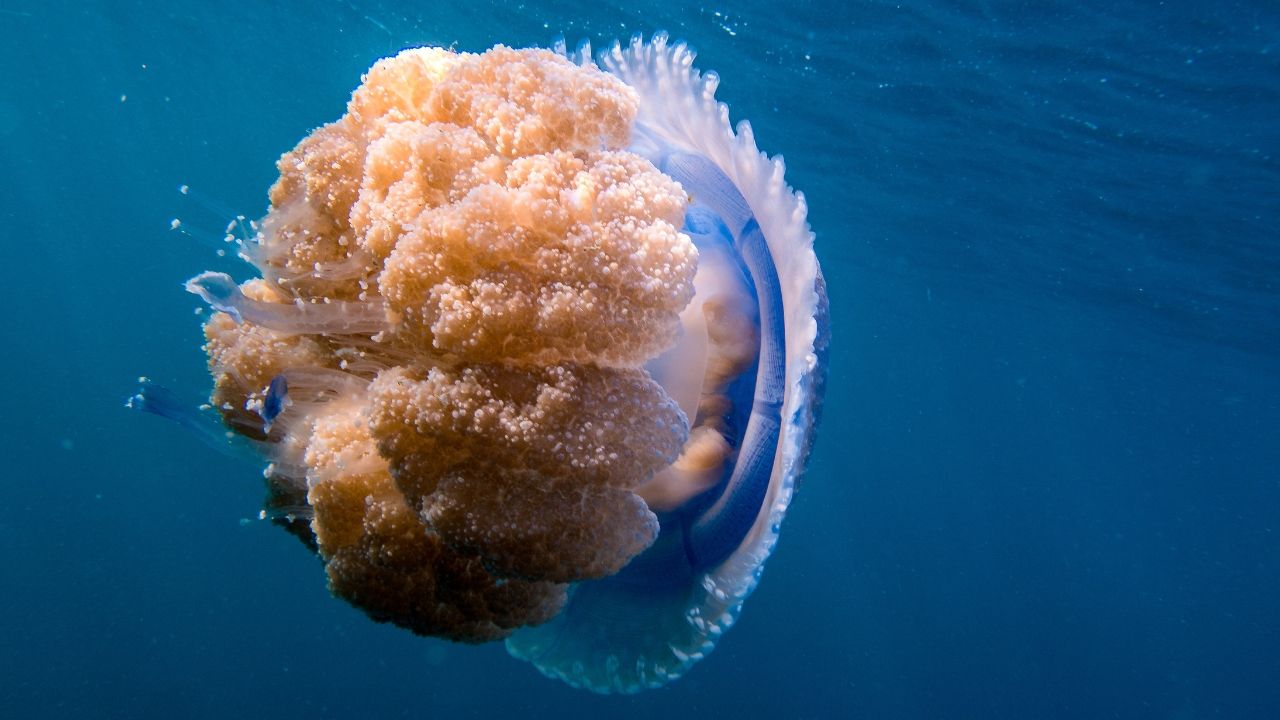
Bienvenido a Koh Tao, a tropical paradise known for its beautiful beaches and vibrant marine life. If you’re planning a visit, you might be wondering about the jellyfish that live in these waters. Allow me to guide you through everything you need to know to make your trip both thrilling and safe.
Conocer las medusas de Koh Tao
Koh Tao, situada en el Golfo de Tailandia, alberga una gran variedad de medusas y es un paraíso para estas fascinantes criaturas. Se pueden encontrar en las aguas que rodean la isla, añadiendo un elemento de intriga y belleza a sus exploraciones submarinas. Saber con qué tipos de medusas puede toparse es clave para garantizar su seguridad.
Jellyfish in Thailand vs. Jellyfish in Koh Tao: What’s the Difference
Before looking at the species found around Koh Tao, it’s useful to understand how the island compares with other destinations in Thailand.
Jellyfish in Thailand | Jellyfish in Koh Tao |
Covers the entire country, including both coasts. | Focuses only on Koh Tao and nearby waters. |
Includes many species such as moon jellyfish, sea nettles, box jellyfish, Portuguese man of war, and seasonal blooms. | Most encounters are harmless jellyfish, but box jellyfish and other species are occasionally reported. |
Jellyfish seasons vary by region because the Gulf of Thailand and Andaman Sea have different monsoon patterns. | Jellyfish activity is influenced by Koh Tao’s local weather, rainfall, currents, and plankton blooms. |
Safety advice is broad and intended for all Thai beaches and islands. | Advice is tailored to Koh Tao’s beaches, dive sites, snorkeling spots, and local warning systems. |
Includes destinations such as Phuket, Krabi, Koh Samui, Hua Hin, Pattaya, and Koh Chang. | Covers only Koh Tao’s marine environment. |
Risk levels differ from one destination to another. Some areas experience more seasonal blooms than others. | Risk changes throughout the year. Conditions can vary from week to week depending on weather and currents. |
Information is general and suitable for travellers planning a trip anywhere in Thailand. | Information is specific to divers, snorkellers, and beachgoers visiting Koh Tao. |
Medical facilities and warning systems vary between destinations. | Visitors can check with local dive centres and beach operators for the latest conditions before entering the water. |
News reports may describe incidents from one region that don’t reflect conditions nationwide. | Local conditions are a better indicator of jellyfish activity than reports from other parts of Thailand. |
Cuándo es más probable ver medusas
De noviembre a enero, la época de lluvias en Koh Tao, es más probable ver medusas. El aumento de las precipitaciones y los cambios en las corrientes oceánicas acercan las medusas a la costa. Aunque esto pueda asustar, saber qué esperar y cómo actuar puede suponer una gran diferencia. Para más información medusa caja y sus características.
Conociendo las medusas: Comportamiento y hábitat
Existen desde hace millones de años y son absolutamente fascinantes. Las medusas suelen encontrarse en las aguas cálidas y poco profundas cercanas a la costa de Koh Tao. Flotan con las corrientes y capturan presas con sus tentáculos. Como las medusas se sienten atraídas por zonas con abundante alimento, es posible verlas cerca de arrecifes de coral y otros entornos marinos ricos en vida.
Conozca a las medusas de Koh Tao
Conozca las distintas especies de medusas que puede encontrarse en Koh Tao. Cada especie es única y tiene sus propios comportamientos y características, que las hacen fascinantes y, en algunos casos, peligrosas.
- Medusa rizostoma: Se sabe que son suaves y que sus picaduras son inofensivas.
- Medusa caja: Son conocidas por su potente veneno y requieren precaución.
- Lion’s Mane Jellyfish: Se identifican fácilmente por su llamativo aspecto y sus numerosos tentáculos.
Conocer estas medusas le ayudará a comprender su papel en el ecosistema y hará que su visita sea segura e inolvidable.
Medusas rizostomas: Los vagabundos pacíficos
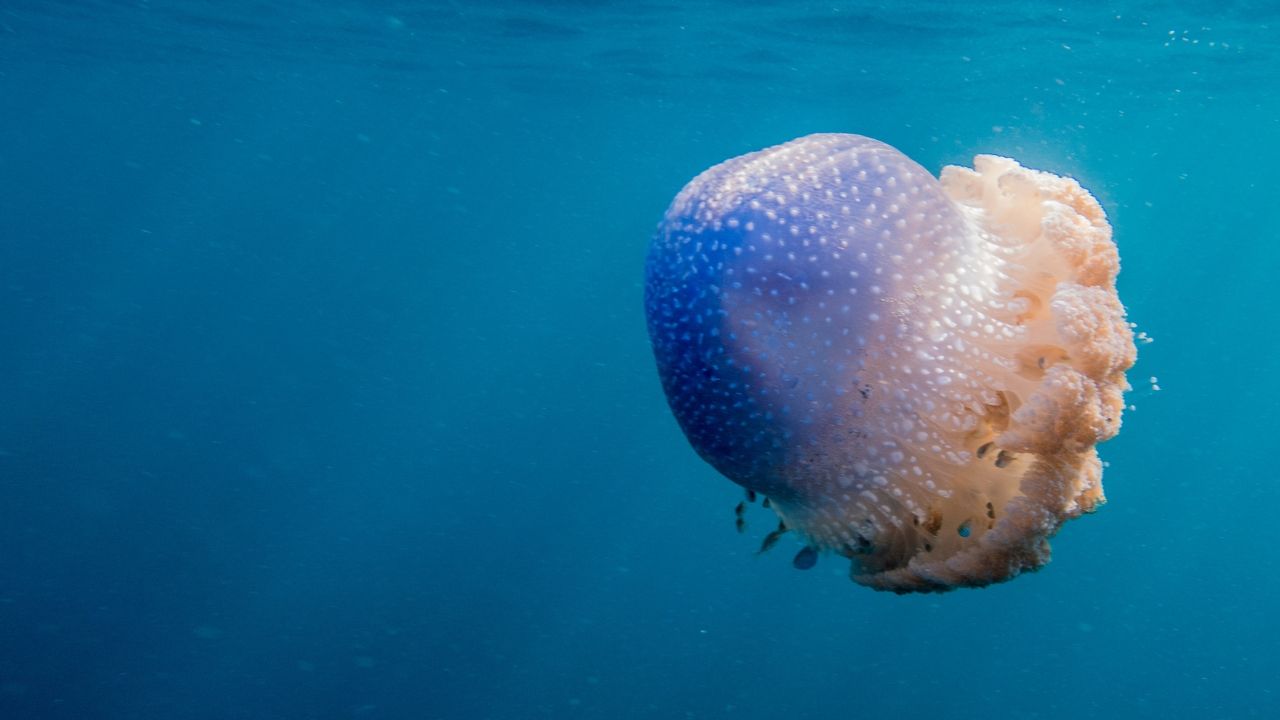
Medusa rizostoma son algunas de las especies que se ven con más frecuencia en las aguas que rodean Koh Tao. Estos pacíficos vagabundos suelen ser inofensivos para el ser humano, por lo que son muy apreciados por buceadores y submarinistas. Con su cuerpo gelatinoso y blando y sus débiles picaduras, son más intrigantes que peligrosas.
Medusas caja: Las criaturas marinas venenosas
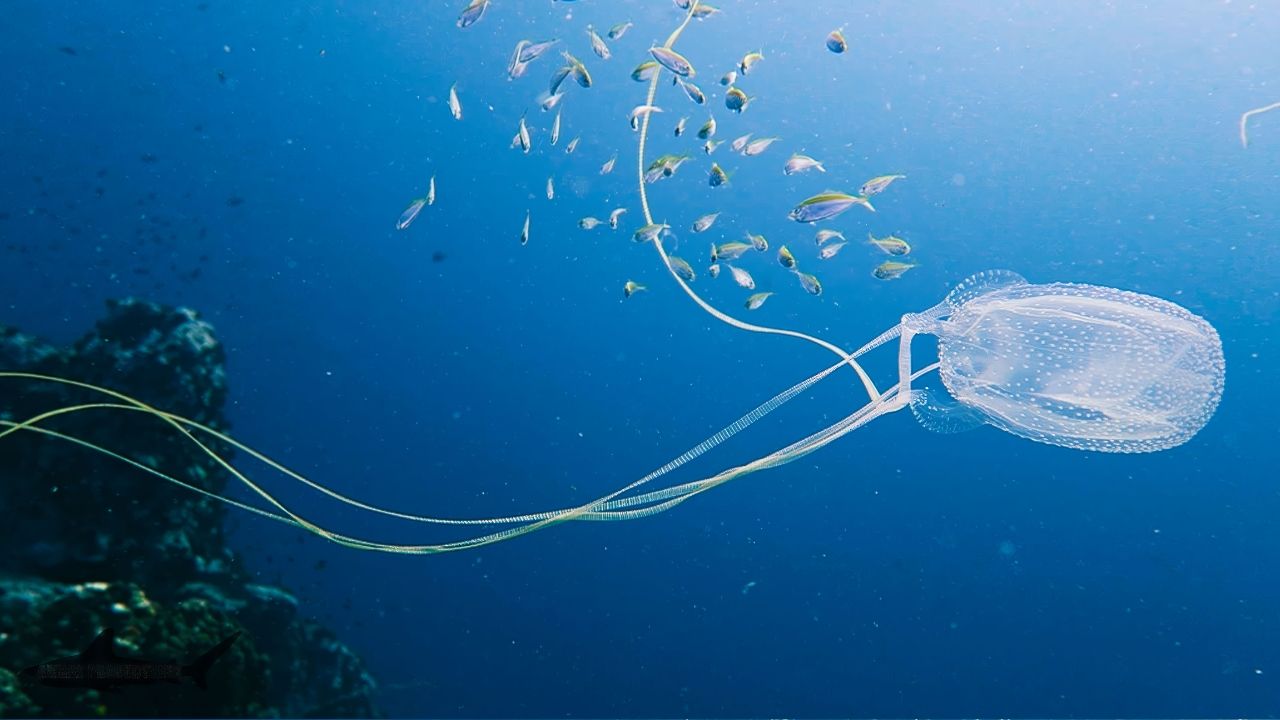
Medusa caja are a whole different ball game. They are known for their deadly venom and should be treated with care and respect. If you plan to go into the waters around Koh Tao, it’s important to know how to spot them and stay clear.
- Se identifican por su campana en forma de caja y los largos tentáculos que arrastran tras de sí.
- Nade siempre con un amigo y manténgase al día de las advertencias locales sobre medusas.
- Have a plan for first aid treatment for jellyfish stings – vinegar is a common treatment.
Knowledge and preparation can change a run-in with a Box jellyfish from a possible danger to an educational opportunity. It’s important to note that Box jellyfish are rare around Koh Tao and they are not as dangerous as their Australian cousins. They still pack a punch!
Meet the Lion’s Mane Jellyfish: A Mesmerizing Sea Spectacle
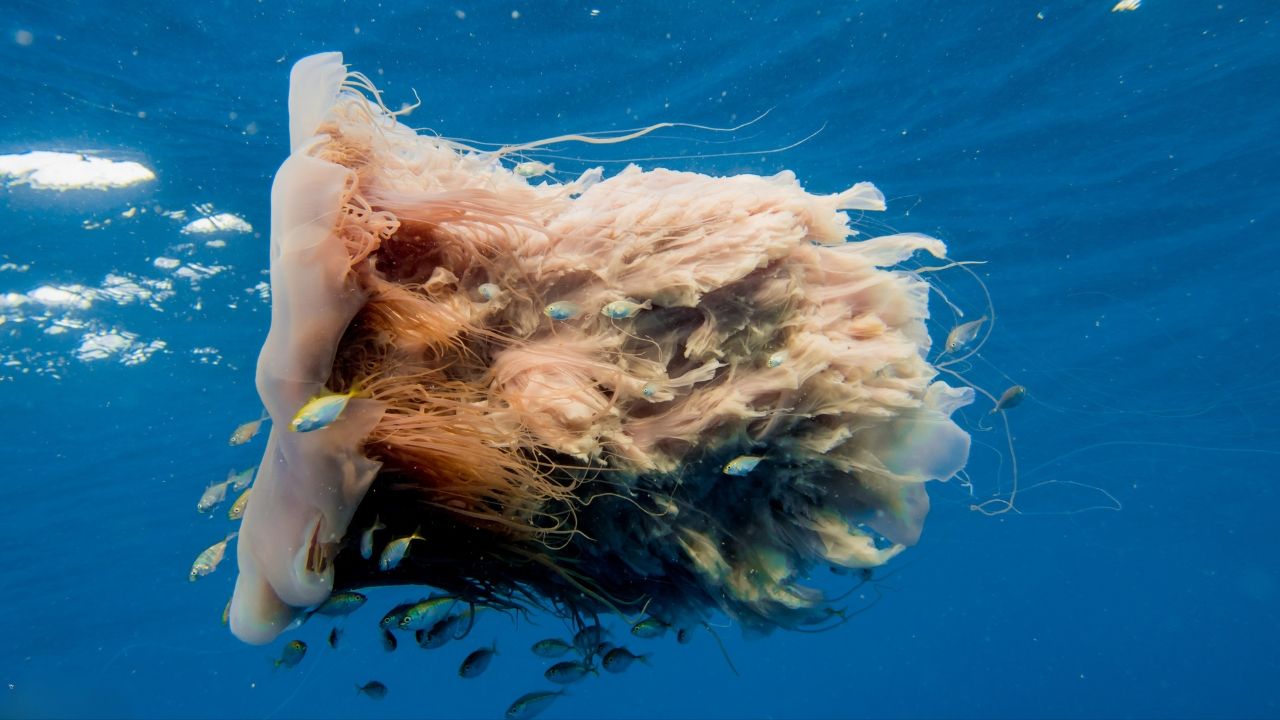
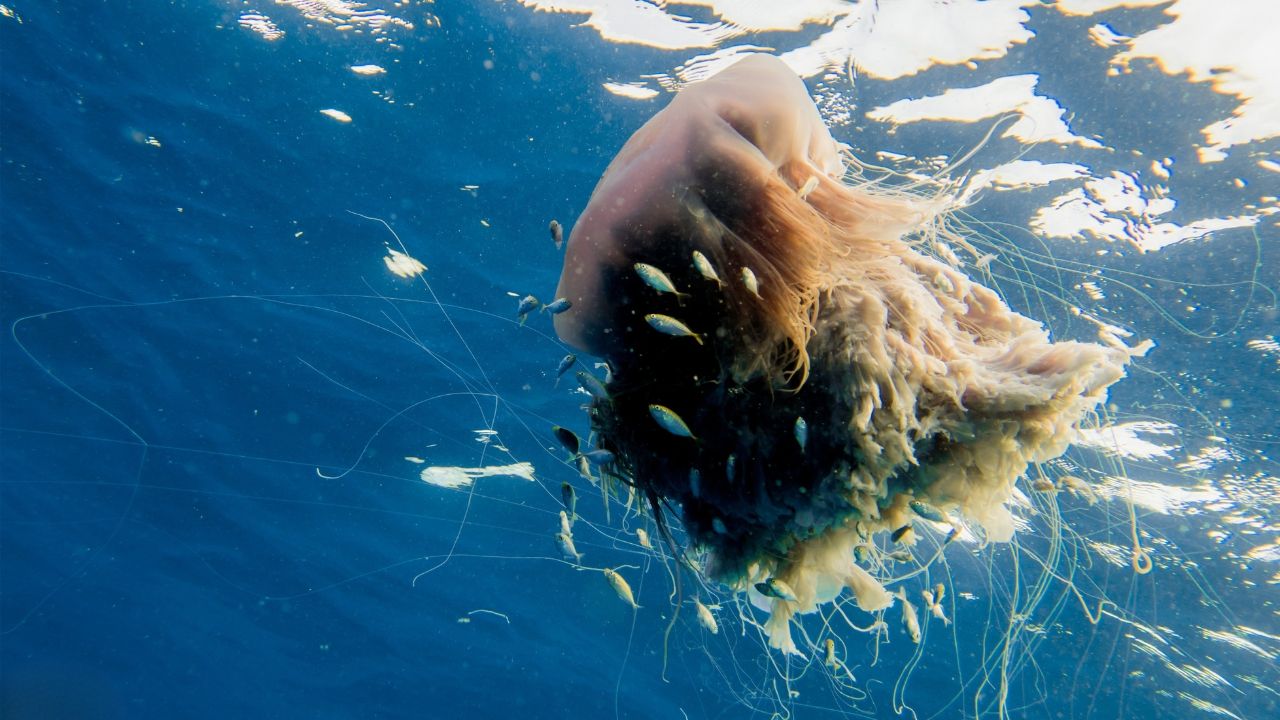
Una de las especies más sobrecogedoras que se pueden encontrar en Koh Tao es el Lion’s Mane jellyfish. As their name suggests, these jellyfish are recognized for their lengthy, cascading tentacles that mimic the mane of a lion. Their radiant hues and elegant motion make them a marvel to observe, but it’s crucial to appreciate them from afar.
Although Lion’s Mane jellyfish are beautiful, their sting can be quite painful. They capture their prey, which can include small fish and plankton, using their tentacles. If you see one while snorkeling or diving, it’s a good idea to observe it from a distance and avoid touching its tentacles.
Which Jellyfish Are Safe to Touch
The short answer is none. It is one of the most common questions visitors ask, but the safest approach is to avoid touching any jellyfish.
Jellyfish You Can Safely Handle (Sort Of)
Moon jellyfish are the closest thing to a “safe” jellyfish. Their stinging cells are usually too weak to penetrate human skin. This is why they are often used in touch tanks at aquariums.
However, that does not mean they are completely safe. People with sensitive skin, small cuts, or repeated contact may still experience mild irritation. It is more accurate to describe them as low risk rather than safe to touch.
Jellyfish You Should Never Touch, Even If They Are Dead
Never touch a box jellyfish. Its tentacles can still release venom for hours after the jellyfish has died or washed onto the beach.
The same advice applies to any jellyfish you cannot identify. If you or your children find one on the beach, leave it where it is. Do not try to move it with your hands.
If necessary, tell a lifeguard, beach staff member, or your dive centre so they can deal with it safely.
Consejos para la seguridad y la interacción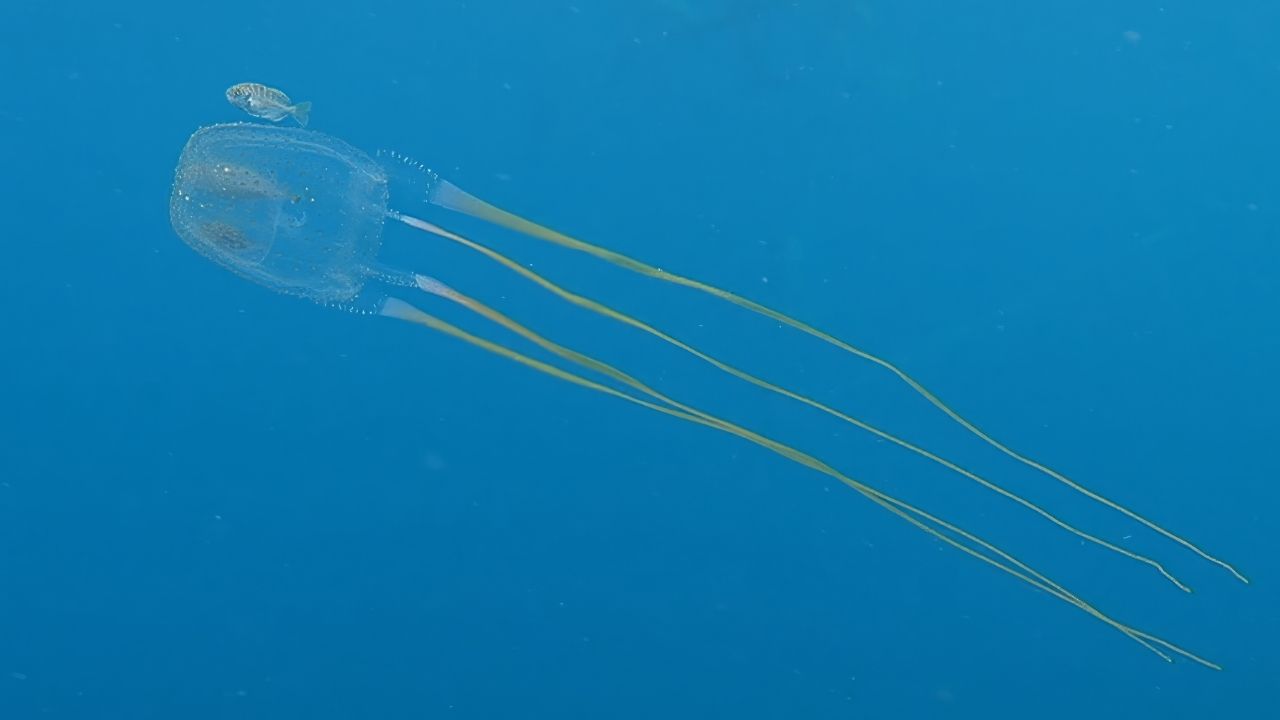
Meeting jellyfish in Koh Tao’s waters can be a thrilling experience, but safety must come first. Following a few simple rules can help you avoid any nasty shocks and make the most of your underwater exploits.
Qué hacer si se topa con una medusa
If you happen to encounter a jellyfish while swimming or snorkeling, stay calm and observe their beauty. Gradually retreat a couple of metres and give the jellyfish a wide berth. Above all, do not try to touch or engage with the jellyfish, as even non-threatening species can give a mild sting. If you’re interested in learning more about marine life, check out the other vida marina en Koh Tao.
Jellyfish Sting Severity Chart: Mild, Moderate, Dangerous
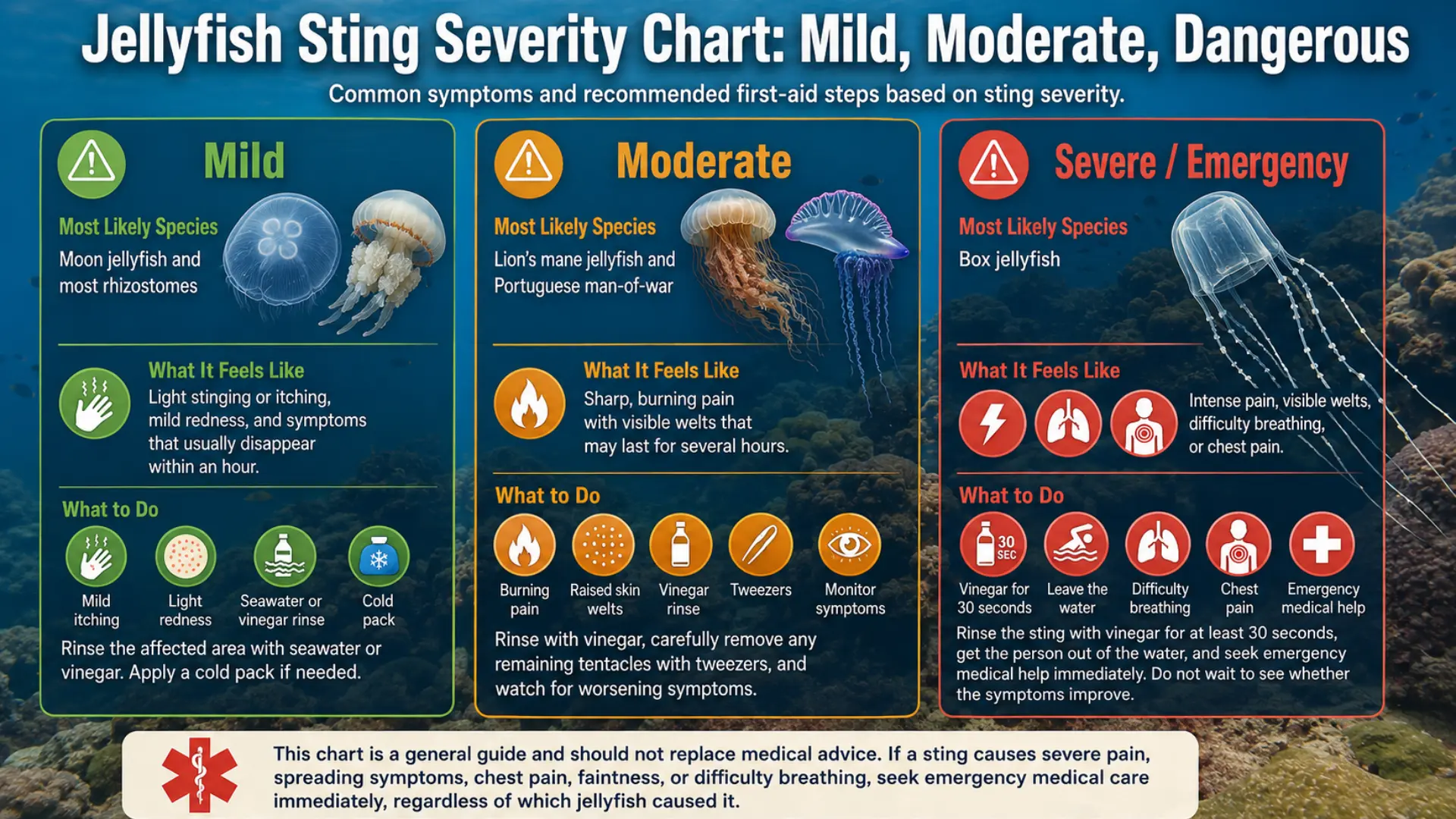
This chart explains what you may experience and the first aid recommended for each level of severity.
Severity | Most Likely Species | What it Feels Like | What to do |
Mild | Moon jellyfish, most rhizostomes | Light stinging or itching, mild redness, and symptoms usually disappear within an hour. | Rinse the area with seawater or vinegar. Apply a cold pack if needed. |
Moderate | Lion’s mane, Portuguese man-of-war | Sharp, burning pain with visible welts that can last for several hours. | Rinse with vinegar, remove any tentacles with tweezers, and watch for worsening symptoms. |
Severe / Emergency | Medusa caja | Intense pain, visible welts, difficulty breathing, or chest pain. | Rinse with vinegar for at least 30 seconds, get out of the water, and seek emergency medical help immediately. Do not wait to see if the symptoms improve. |
NOTE: This chart is a general guide and should not replace medical advice. If a sting causes severe pain, spreading symptoms, or difficulty breathing, seek emergency medical care immediately, regardless of which jellyfish caused it. |
Cómo prepararse y tratar las picaduras de medusa
Estar preparado es crucial cuando se trata de encuentros con medusas. Antes de lanzarte al agua, asegúrate de que tienes las herramientas necesarias para hacer frente a una picadura. Lleve consigo una botellita de vinagre, que puede ayudar a neutralizar el veneno de algunas picaduras de medusa. Todos los barcos de buceo de Koh Tao llevan una botella de vinagre por si a alguien le pica una medusa.
Keep in mind that knowing about and preparing for jellyfish stings are your best protections.
Cómo mantenerse seguro en el agua
Antes de embarcarse en su viaje a Koh Tao, conviene conocer las criaturas marinas locales y las normas de seguridad. He aquí algunos consejos que le ayudarán a divertirse con seguridad:
- Consulte las alertas locales de medusas y nade en las zonas designadas como seguras.
- Utilice ropa protectora, como un traje de neopreno o una lycra, para minimizar la exposición de la piel.
- Manténgase informado sobre los tipos de medusas presentes en la zona y cómo identificarlas.
- Respete el entorno marino y evite tocar o molestar a las criaturas marinas.
Jellyfish Nets and Protected Swimming Areas on Koh Tao
Some nearby islands have installed jellyfish nets to help protect swimmers. Koh Samui and Koh Phangan have dedicated jellyfish nets at several of their busiest beaches following a number of serious stings in previous years. Koh Mak, another island in the Gulf of Thailand, was the first in the country to introduce this type of protection successfully.
Koh Tao does not currently have dedicated anti-jellyfish nets. The island has had relatively few serious incidents, so there has been less need to install them.
Some beaches, such as the northern end of Mae Haad, have marked swimming areas. These are designed to separate swimmers from boat traffic. They help improve safety but are not intended to keep jellyfish out.
Which Koh Tao Beaches Have Net Enclosures?
At the moment, no beach on Koh Tao has a dedicated anti-jellyfish net like those found at Chaweng or Bophut on Koh Samui.
This could change in the future. If a jellyfish net is important for your trip, check with your resort or dive centre before you book. Do not assume that one is available.
What to Ask Your Dive Shop or Resort Before Booking
Before booking a dive or snorkelling trip, consider asking these questions:
- Has there been any jellyfish activity reported this week?
- Do your boats carry vinegar and a jellyfish sting first aid kit?
- Is there a sheltered or shallow area you recommend for anyone worried about jellyfish?
- What is your emergency procedure if a guest is stung during a dive or snorkelling trip?
A good dive operator should be able to answer these questions clearly and confidently. Honest and practical advice is a better sign than vague reassurance.
Jellyfish Around the Gulf of Thailand (Koh Phangan, Koh Samui & Nearby Islands)
If Koh Tao is part of a larger island-hopping trip, it helps to understand how its jellyfish risk compares with nearby islands.
Koh Phangan Jellyfish Activity
Koh Phangan has recorded several serious box jellyfish incidents, including a widely reported child fatality in recent years. Most reports have come from beaches on the island’s eastern and northern coasts.
In response, local authorities have installed jellyfish nets at some beaches and increased public safety warnings. Visitors are advised to pay extra attention during periods when jellyfish activity is more common.
Koh Samui Jellyfish Activity
Koh Samui has recorded more box jellyfish incidents than Koh Tao or Koh Phangan. Reported cases have been concentrated around popular beaches such as Chaweng, Bophut, and Lamai.
Several of these beaches now have jellyfish nets and warning signs to help improve swimmer safety.
How Koh Tao Compares
Although Koh Tao is part of the same island group, it has recorded fewer reported box jellyfish incidents than Koh Phangan and Koh Samui. This is despite the island attracting large numbers of divers and snorkellers every year.
Researchers believe this difference is linked to local environmental conditions and lower numbers of box jellyfish in the area. No single factor fully explains the difference.
If you are travelling between these islands, always check the latest local conditions before entering the water. Follow advice from your dive centre, resort, or local authorities, and remember that jellyfish activity can vary from one island to another.
Esfuerzos de conservación y sensibilización
Koh Tao’s vibrant marine ecosystem is a precious resource that requires protection and conservation. As visitors, we have a responsibility to ensure that our actions do not harm the environment or its inhabitants.
Preservar las medusas y su entorno
Grupos locales y voluntarios trabajan sin descanso para mantener el frágil equilibrio de vida marina en Koh Tao. Esto incluye limpiezas de playas, iniciativas educativas y esfuerzos por disminuir la contaminación y salvaguardar los arrecifes de coral.
Al participar en estos actividades de conservación, you can play a part in maintaining the natural beauty of Koh Tao. Why not take part in a beach cleanup or support local conservation projects during your stay? Your actions can make a big difference to the health and sustainability of the island’s ecosystem.
Let’s keep in mind that every little effort matters when it comes to ensuring that future generations can enjoy the marvels of the sea.
Enseñar a visitantes y lugareños a cuidar el medio ambiente
La educación puede ayudar mucho a inculcar el deber de proteger el medio ambiente. En Koh Tao se hacen muchos esfuerzos por enseñar a turistas y residentes la importancia de proteger la vida marina. Los centros de buceo y los grupos locales suelen dar clases y charlas sobre conservación marina, haciendo hincapié en el papel de las medusas y otros animales marinos en el ecosistema.
Not only do these programs raise awareness, but they also promote sustainable tourism practices. By understanding the local marine environment, tourists can make decisions that will help protect the delicate balance of life in the waters of Koh Tao. Participating in educational activities is a rewarding way to improve your travel experience while making a positive contribution to the island’s future.
Frequently Asked Questions (FAQs)
 ES
ES  EN
EN