
Mastering the 10 essential scuba diving signals every diver should know is crucial for underwater safety and communication. The most important signals include “OK/Are You Okay?” (thumb and index finger circle), “Problem” (flat hand wobbling), “Up/Down” (thumb pointing), “Stop” (open palm), and “Out of Air” (hand across throat). These universal hand signals ensure clear communication between dive buddies regardless of language barriers or diving experience level.
When you’re exploring the underwater world, clear communication can mean the difference between a safe, enjoyable dive and a potentially dangerous situation. Scuba diving signals serve as a universal language that transcends spoken words, enabling divers from different countries and backgrounds to communicate effectively beneath the surface.
Whether you’re planning to travel to Koh Tao for your first diving experience or you’re already certified but need a refresher, understanding these fundamental signals is essential for every underwater adventure.
Why Underwater Communication Matters
Underwater communication through hand signals isn’t just convenient—it’s a critical safety requirement. When you’re exploring the diverse marine life around Koh Tao, you need to be able to communicate quickly and clearly with your dive buddy. The underwater environment presents unique challenges where misunderstandings can lead to disorientation, panic, or dangerous situations. Standard hand signals ensure that your messages are understood by all divers, regardless of their nationality or diving certification agency.Essential Basic Signals Every Diver Must Know
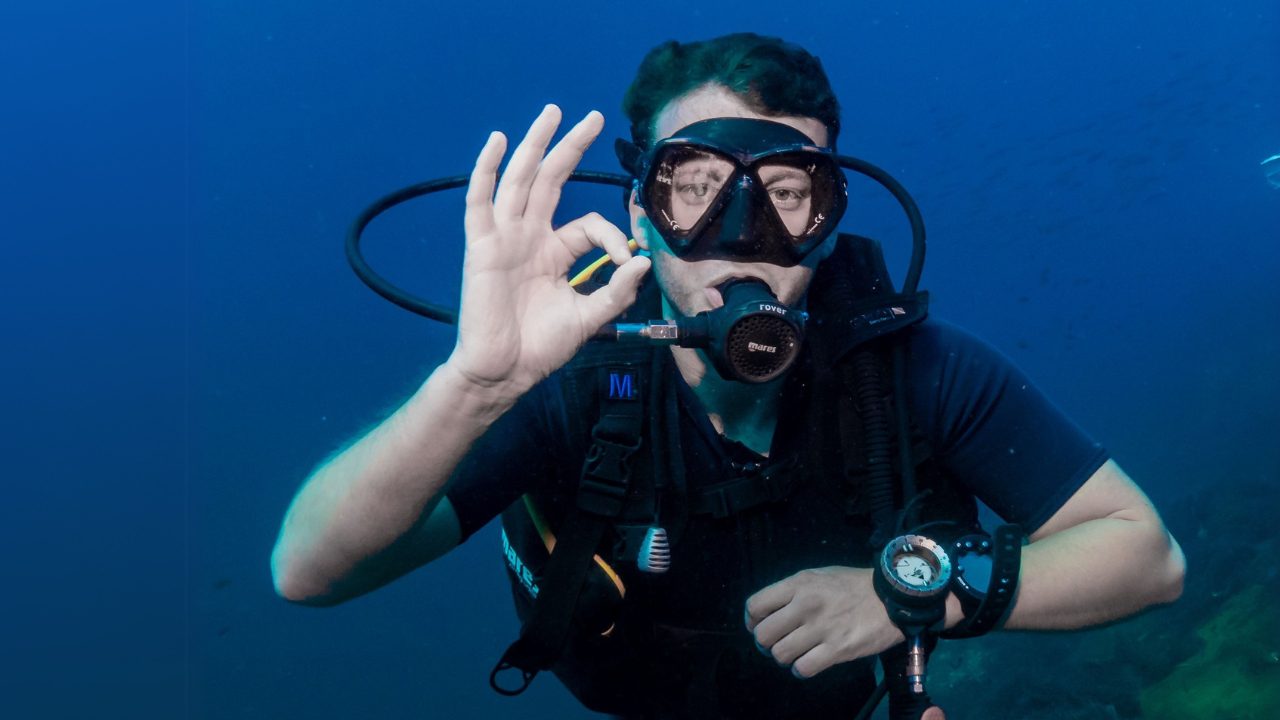
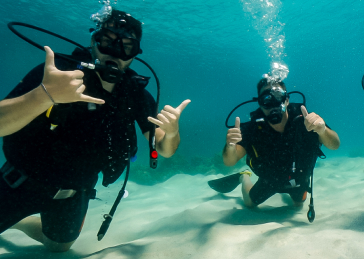
1. “OK” / “Are You Okay?”
The most frequently used signal in scuba diving, essential for checking on your dive buddy’s wellbeing.
How to perform:
- Form a circle with your thumb and index finger
- Keep other fingers extended
- Hold the signal clearly visible to your buddy
- Use for both asking and responding affirmatively
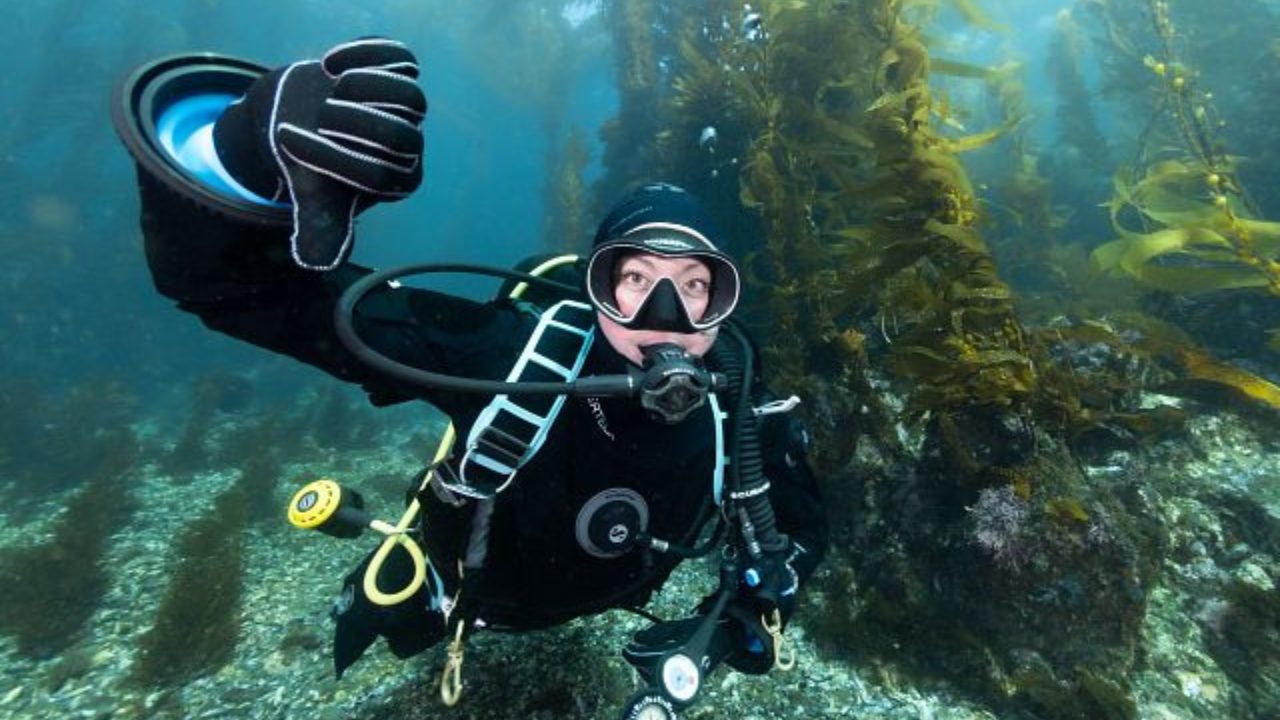
2. Up/Down (Ascend/Descend)
Critical for coordinating depth changes and ensuring your buddy knows your intentions.
How to perform:
- Up: Point thumb upward with closed fist
- Down: Point thumb downward with closed fist
- Make the gesture deliberate and clear
- Wait for acknowledgment before changing depth
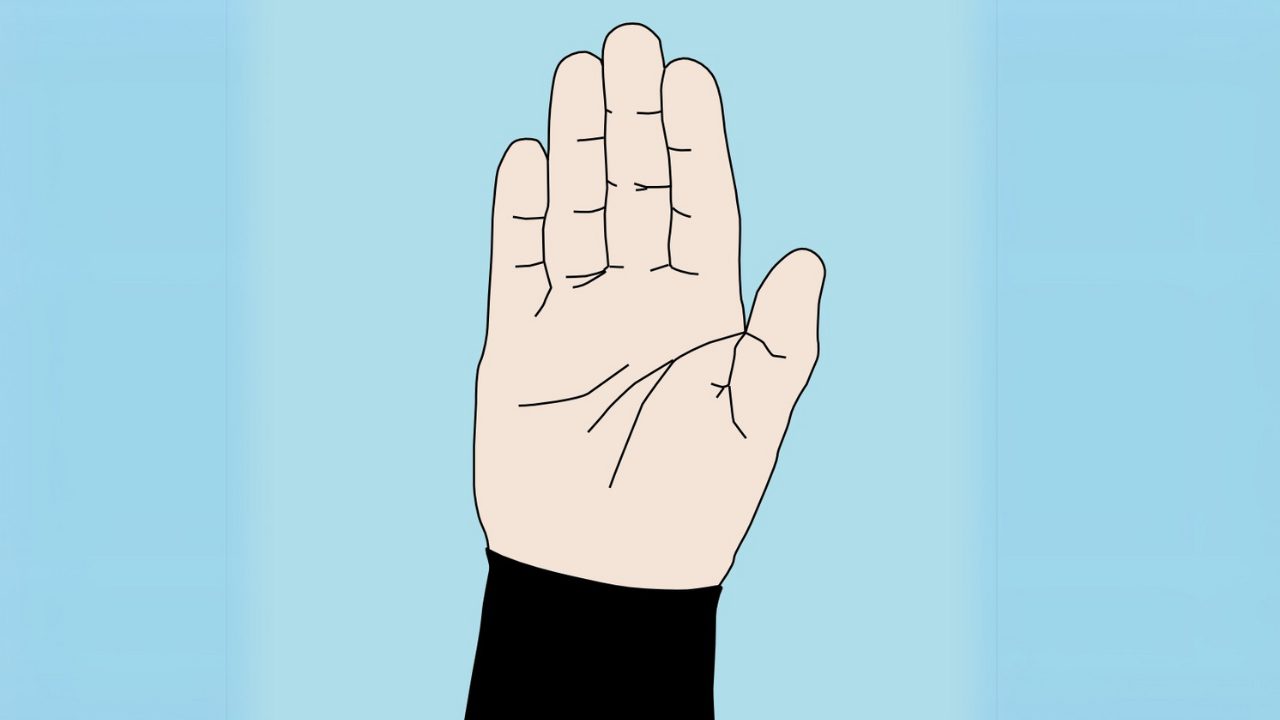
3. Stop/Wait
Immediately halts all movement and actions – crucial for safety situations.
How to perform:
- Extend open hand with palm facing forward
- Similar to a traffic stop sign gesture
- Hold firmly until acknowledged
- Use when you need immediate attention
4. Equalizing Ears
Indicates need to equalize ear pressure, preventing discomfort and potential injury.
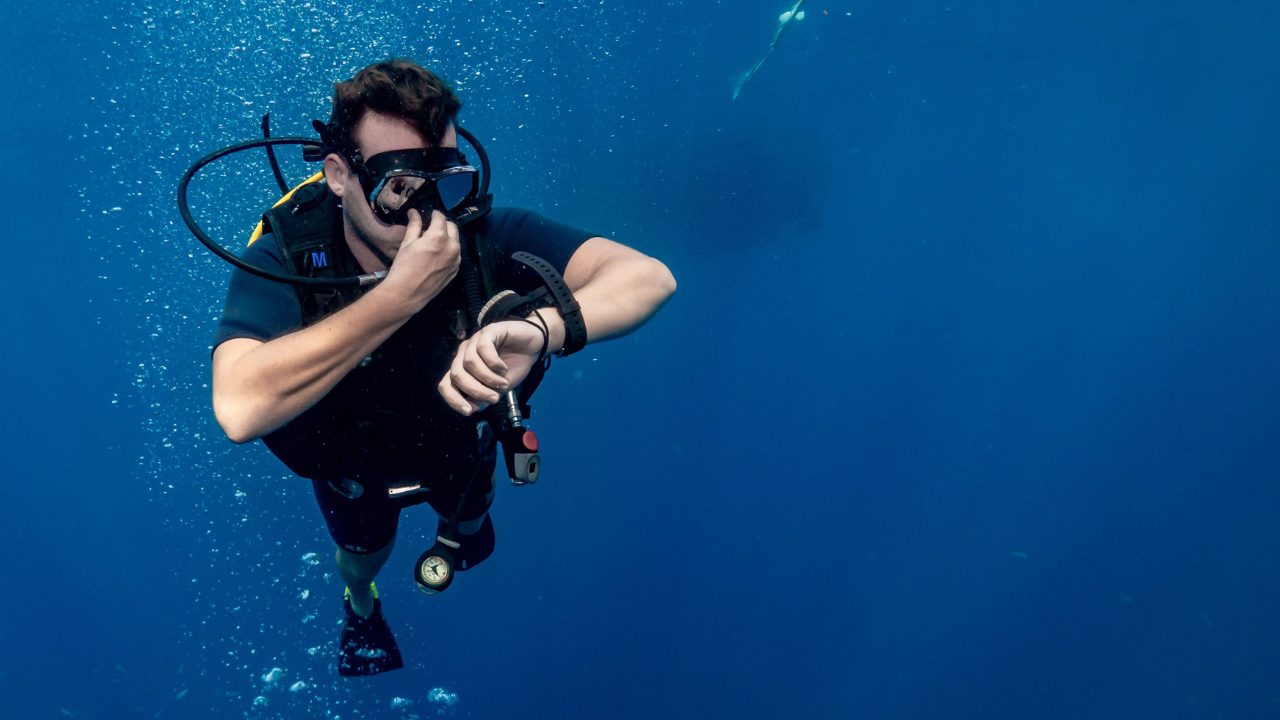
How to perform:
- Pinch your nose with thumb and index finger
- Gently blow against closed nostrils
- Signal shows you’re equalizing pressure
- Essential during descent and ascent
5. Problem/Not OK
Indicates something is wrong and needs immediate attention.
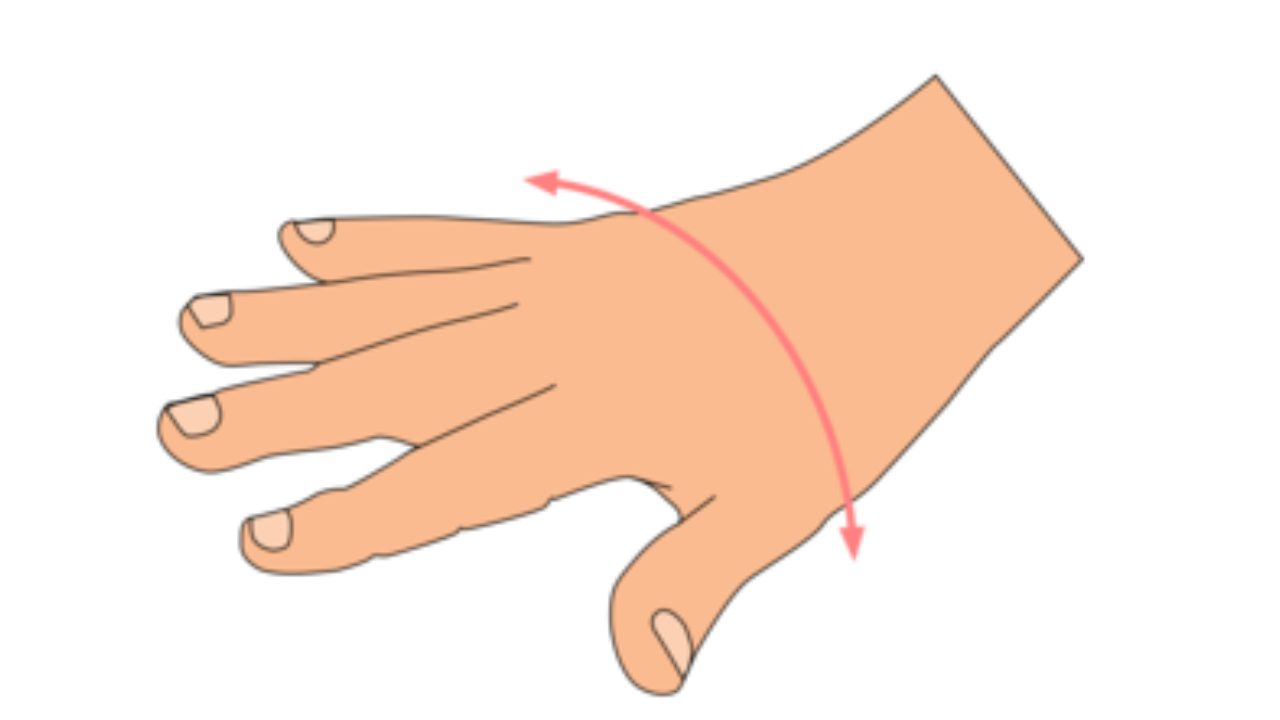
How to perform:
- Hold hand flat and shake side to side
- Similar to “so-so” gesture on land
- Point to the specific problem area
- Follow up with more specific signals
6. Come Here/Follow Me
Directs your buddy to follow or come closer, especially useful when spotting marine life.
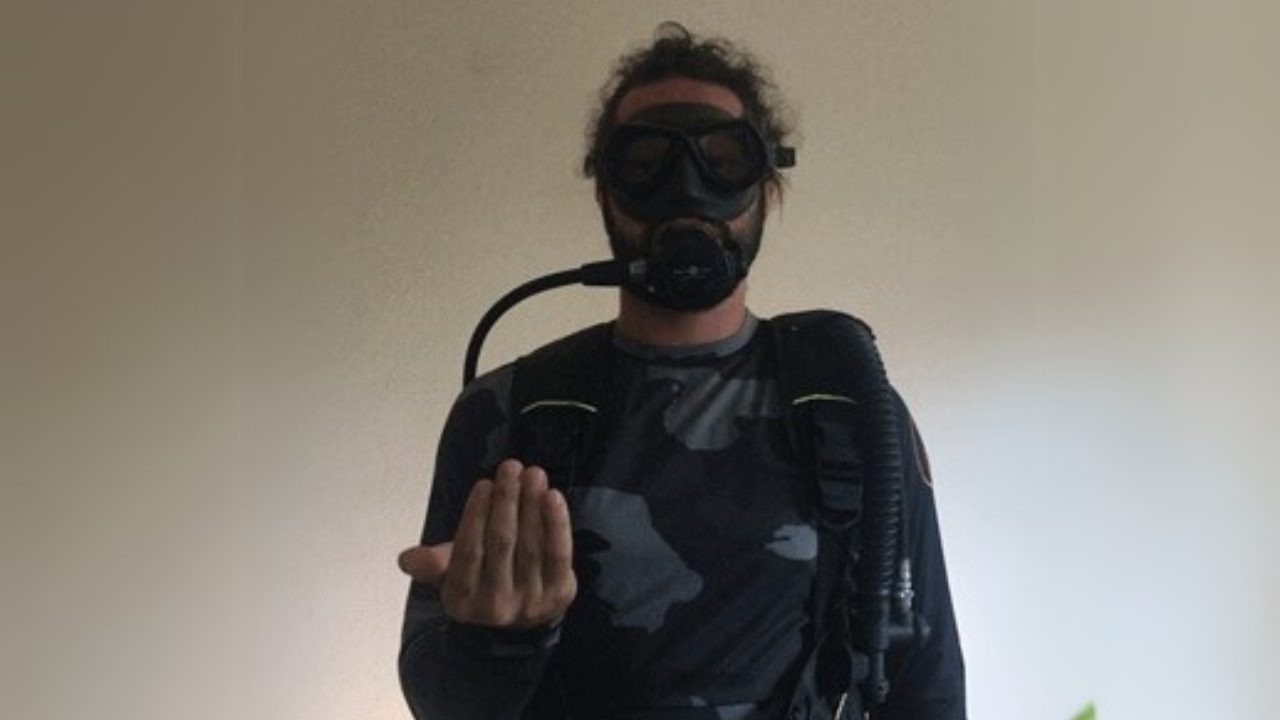
How to perform:
- Extend arm and beckon with fingers
- Similar to “come here” gesture on surface
- Use when leading or showing something
- Perfect for marine life encounters
Critical Emergency Signals
Emergency Signals – Practice These Regularly
These emergency signals can save lives. Practice them during every training dive and ensure your buddy knows them perfectly.
7. Out of Air
The most critical emergency signal – indicates immediate need for air sharing.
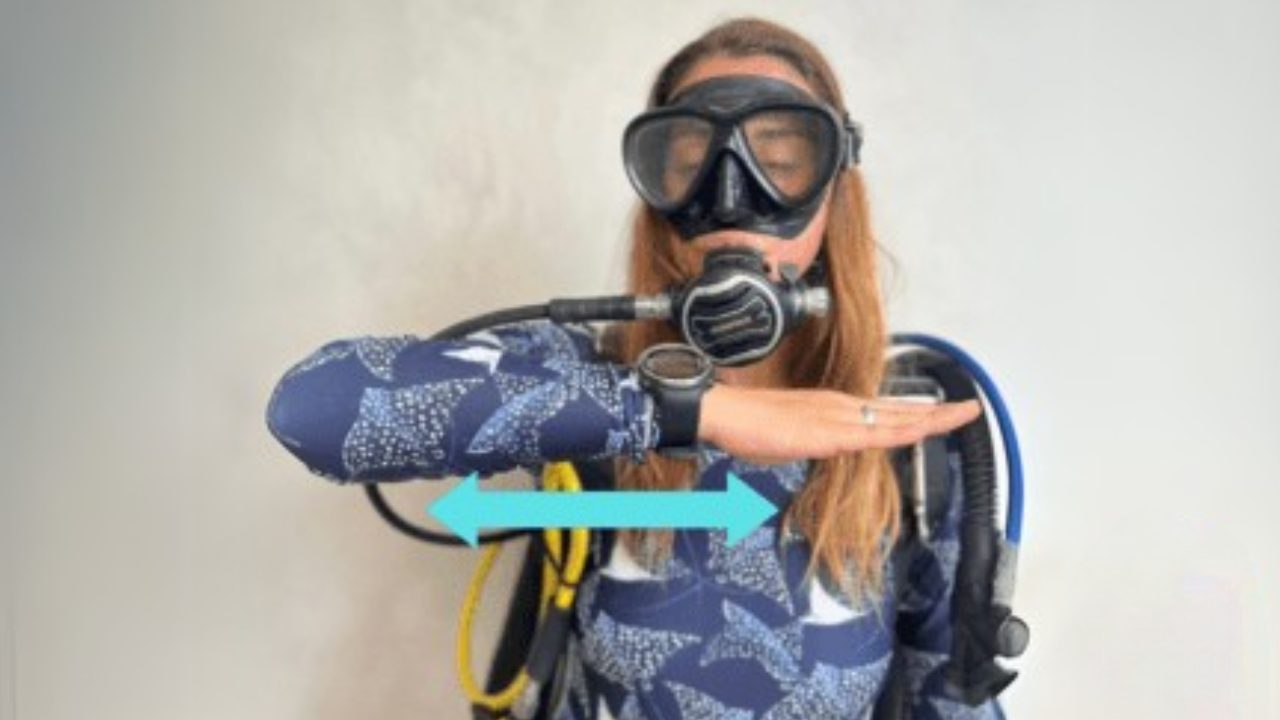
How to perform:
- Draw hand horizontally across throat
- Like a “cut-off” motion
- Immediately approach your buddy
- Prepare for emergency ascent procedures
8. Share Air
Requests air sharing from your buddy’s alternate regulator.
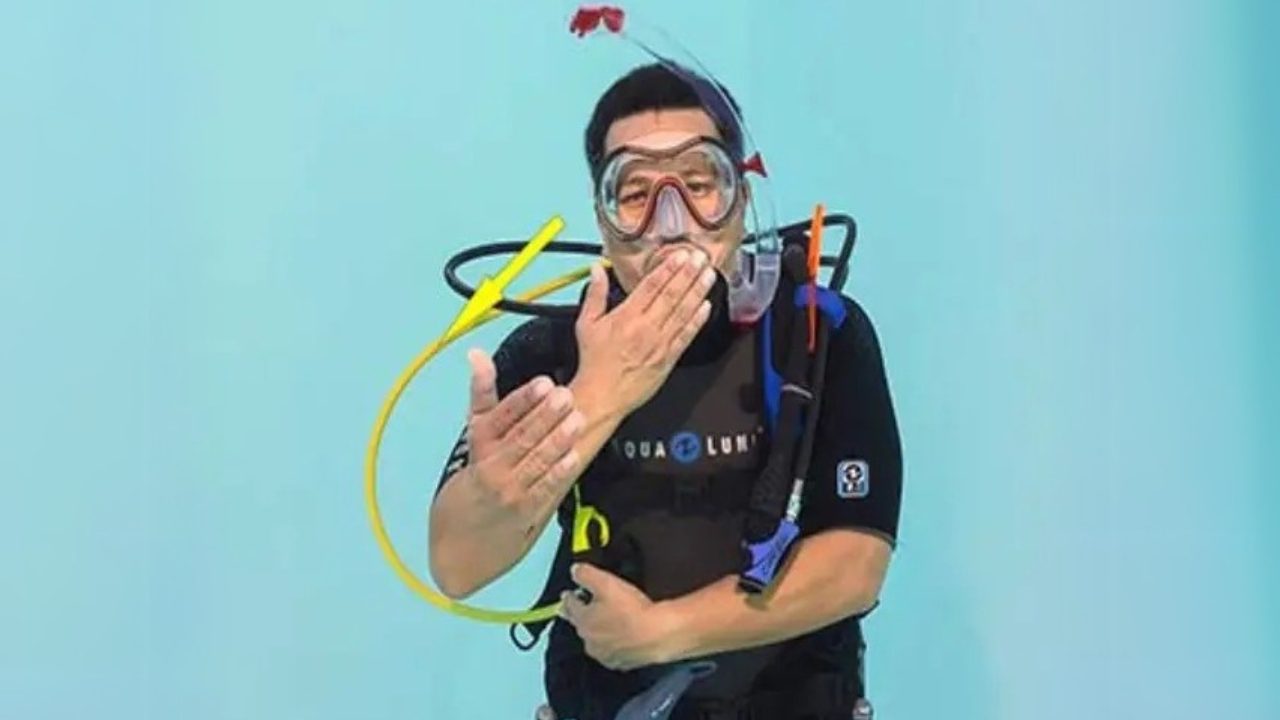
How to perform:
- Move hand back and forth to your regulator
- Point to your buddy’s octopus
- Stay calm and move slowly
- Signal OK once air sharing is established
9. Help/Assistance
Signals need for immediate help from dive buddy or other divers.
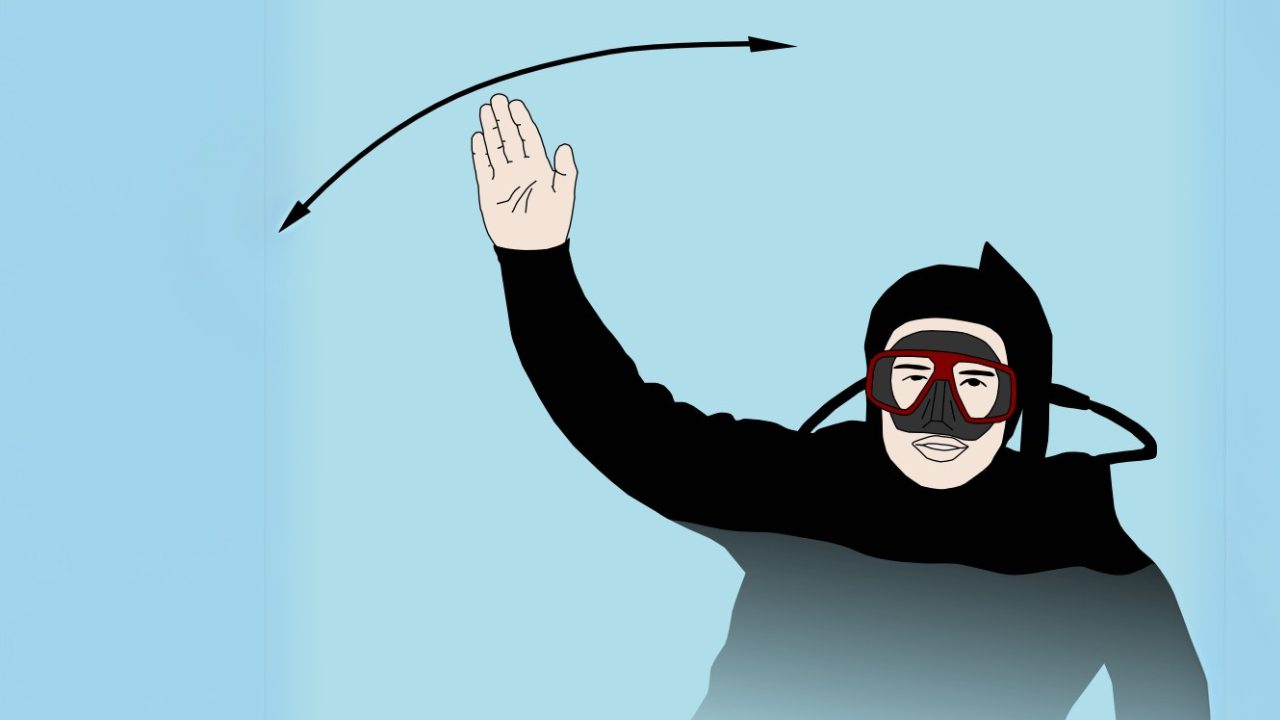
How to perform:
- Wave one arm above head in sweeping motion
- Use large, obvious movements
- Continue until acknowledged
- Follow with specific problem signals
10. Safety Stop
Indicates need for 3-minute safety stop at 5 meters depth.
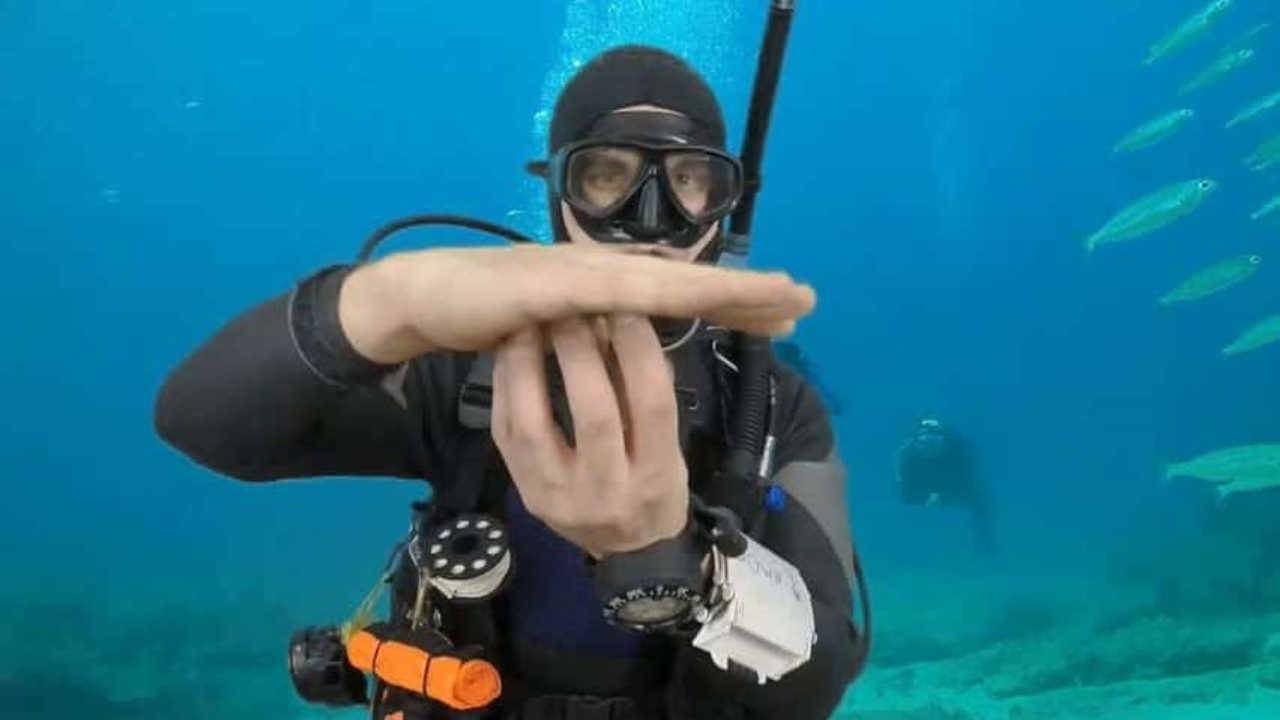
How to perform:
- Hold one hand flat, palm down
- Show three fingers with other hand beneath
- Indicates 3 minutes at 5 meters
- Essential for safe diving practices
Mastering Underwater Communication
Practice Makes Perfect
Learning these signals is just the beginning. When you’re diving at the top dive sites around Koh Tao, you’ll need to use these signals instinctively. Regular practice with your dive buddy before entering the water ensures smooth communication during your underwater adventure.Pre-Dive Review
Always review key signals with new dive buddies before entering the water. This prevents misunderstandings during the dive.
Adapt to Conditions
When diving during different seasons in Koh Tao, adjust signal size based on visibility and current conditions.
Maintain Eye Contact
Ensure your buddy is looking before giving signals. Get their attention with a gentle tap if needed.
Stay Calm
Even in emergency situations, perform signals slowly and clearly. Panic leads to miscommunication.
Regional Variations and Certification Standards
While most diving signals are universal, some variations exist between certification agencies and regions. When participating in diving activities for different experience levels, discuss any local signal variations with your instructor or dive guide. The diving community in Koh Tao follows international standards, but some dive centers may have specific signals for local conditions or marine conservation protocols.🐠 Master Diving Signals with La Bombona Diving
Ready to learn proper underwater communication techniques with Koh Tao’s most experienced instructors?
Our comprehensive Open Water certification course includes thorough signal training, ensuring you communicate confidently and safely underwater.
- Comprehensive signal training with experienced instructors
- Practice sessions in confined and open water
- Small class sizes for personalized attention
- 4 ocean dives to perfect your communication skills
- International certification recognized worldwide
- Safety-first approach to diving education
4 ocean dives over 4 days | All equipment included | Master essential diving signals
Preguntas frecuentes
 ES
ES  EN
EN