

Modified 12th June 2025
Table of Contents
Legal Guidelines for Tourists Travelling to Koh Tao
SUMMARY –
- Thailand now requires all foreign visitors to complete the Thailand Digital Arrival Card (TDAC) before arrival.
- Recreational cannabis has been illegal again since June 2025, with medical use allowed only with a fresh prescription. Hard drugs and vaping carry severe penalties, including imprisonment.
- The legal drinking age is 20, with alcohol sales allowed only during designated hours. Drinking is banned in temples, public transport areas, petrol stations, parks, and government buildings.
Important Laws to Follow in Koh Tao to Stay Out of Any Trouble
In Koh Tao, Thailand, even minor violations can result in fines, penalties, or legal complications that can easily ruin your trip. Taking a few minutes to familiarise yourself with the rules will help you avoid unnecessary trouble and ensure a smooth, stress-free stay. Below are the most important laws every visitor should keep in mind.1. Entry, Visa & Immigration Rules
All immigration rules of Thailand, such as visa on arrival, visa exemptions, overstays, extensions, apply equally on Koh Tao. On May 1, 2025, Thailand has digitised its arrival process. All foreign visitors are now required to complete the Thailand Digital Arrival Card (TDAC) online before entering the country.- The stay allowed is 15 days only.
- This is only for short visits.
- Single-Entry Tourist Visa (Most common)
- Valid for one entry.
- Allows you to stay for 60 days. You can extend it once for 30 days.
- Multiple Entry Tourist Visa (Harder to Get)
- Valid for 6 months.
- You can enter Thailand as many times as you want during these 6 months.
- Each entry gives you 60 days, with an option to extend 30 days.
- Usually requires stronger financial proof and a reason for multiple entries.
| Duration of Overstay | Voluntary Surrender Fine | Voluntary Surrender Ban | Arrested Ban |
|---|---|---|---|
| Less than 90 days | 500 THB per day (max 20,000 THB) | Allowed to leave (No ban) | Up to a 5-year ban |
| More than 1 year | 20,000 THB | 3-year ban | 10-year ban |
| More than 5 years | 20,000 THB | 10-year ban | 10-year ban |
2. Drug Laws & Controlled Substances
Thailand maintains some of the harshest drug laws globally. The rules were loosened for a while, but the government has now firmly brought them back. Putting Back Under Criminal Law– Since June 2025, recreational cannabis has been illegal again in Thailand and is only allowed for medical use.- To legally get cannabis in Thailand, you need a valid medical prescription from a licensed doctor. And, it must be issued within the last 30 days. Recreational use is not allowed. Breaking these rules can lead to criminal charges, including up to one year in jail and a fine of 20,000 baht.
- Penalties for breaking the law are applied to anyone aged under 18 years. And, the penalties for children can include detention in a juvenile and sometimes in adult prison.
3. Alcohol & Drinking Regulations
Koh Tao is lively, but alcohol use is strictly regulated, especially for age and sale times. Legal Drinking Age – The legal age for purchasing and consuming alcohol is 20 years old. Visitors are advised to carry their passports as ID for age verification.- Temples
- Government Offices
- Parks
- Petrol Stations
- All Public Transport Areas (including train and bus stations, piers, and airport terminals except in approved duty-free or licenced zones and on board any public vehicles).
4. Respecting the Monarchy – “Lèse‑Majesté” Law
This is one of the most serious laws for visitors. The Lèse-Majesté law (Section 112) is a major crime in Thailand. The law forbids –- Defaming the monarchy
- Insulting and threatening the King & the Queen
- Disrespecting The Heir-Apparent and The Regent
5. Gambling, Cards & Prohibited Games
Gambling is illegal in Thailand, and the rules apply to both locals and tourists. This goes for many card games, too.- prosecution,
- heavy fines,
- or even imprisonment.
6. Environmental Laws, Littering & Wildlife / Marine Protection
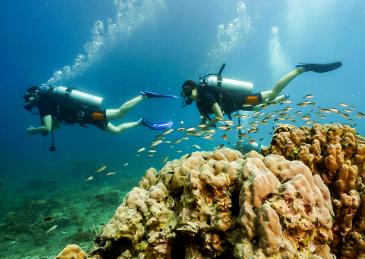
On Koh Tao, protecting the environment is very important. Thailand has strict rules for waste management and marine conservation, especially around the popular dive sites. Zero-Tolerance for Marine Damage – As of April 2025, it is illegal to touch marine life, move corals, or feed fish. These actions harm the ecosystem. For example, feeding fish changes their natural behaviour and can cause algae to grow, which smothers coral.7. Dress Code, Public Decency & Cultural Respect
Thai cultural norms require respectful dress, especially when visiting sacred sites. Rules for Visiting Temples – While on Koh Tao, you might spend most of your time in swimsuits, visiting temples or certain official sites requires modesty. At major sites like The Grand Palace (and many others), inappropriate outer garments include shorts, mini-skirts, vests, and torn jeans for both men and women. Public Decency – Indecent behaviour like helping another person engage in sexual acts by persuading, taking, or arranging someone, whether they agree or not, can face serious punishment. This can be imprisonment for 1 to 10 years and a fine of 2000 to 20000 Baht.Practical Advice for Divers & Tourists on Koh Tao
If you plan to enjoy the water, a few basic precautions can help you avoid legal or safety problems. Being prepared lets you relax and enjoy the amazing underwater world. Before Diving or Snorkelling – For this, follow local dive rules and practice responsible diving. Keep at least two meters away from coral reefs and use only reef-safe sunscreen, as banned sunscreens can lead to penalties up to 100,000 Baht. Documents to Carry – Always carry copies of your passport, relevant visa pages, and, if applicable, your dive certification and contact information for your resort or dive operator. Nightlife Awareness – Respect local norms at night. Enjoy the bars and beach parties, but be aware of the strict alcohol laws. Also, remember that theft and break-ins can happen, especially in budget guesthouses.What to Do if Things Go Wrong – Legal or Medical Help & Resources
Even with the best intentions, emergencies can still happen. Having the right contact numbers ready can make a big difference in how quickly you get help. If you end up in trouble, stay calm, cooperate, and get professional assistance right away. Don’t try to handle legal issues on your own.| Emergency Contact Service | Phone Number | Notes |
|---|---|---|
| Tourist Police | 1155 (24 hours) | Recommended first contact. Operators speak English, and the Koh Tao Tourist Police also have Western volunteers who can help with translation and resolving disputes. |
| General Police/Emergency | 191 | For general crime reporting or immediate police presence. |
| Fire Department | 199 | For fire emergencies. |
Conclusión
Travelling to Koh Tao promises an unforgettable experience with world-class diving, warm tropical weather, and welcoming local culture. But enjoying this dream trip fully depends on respecting local laws and cultural expectations. There are five key areas every visitor should pay close attention to –- strict drug laws
- regulated alcohol rules
- the sensitive Lèse-Majesté law
- strict environmental protection laws
- and local customs and etiquette
Frequently Asked Questions:
Do I need a visa to travel to Koh Tao?
If you’re from countries like the US or the Philippines, you usually don’t need a traditional visa to visit Koh Tao. Thailand gives many nationalities visa-free entry for 30–60 days for tourism. However, you must complete the Thailand Digital Arrival Card (TDAC) online within 3 days of your arrival. Make sure your passport is valid for at least 6 months, and you have proof of onward travel.
Is it safe to travel to Koh Tao?
Koh Tao is generally safe for tourists, particularly for diving and snorkeling. However, visitors should remain cautious and take basic precautions. Be mindful of risks such as drink spiking, alcohol-related incidents, scams, and theft.
What is the best time to visit Koh Tao?
En best time to dive in Koh Tao is from March to September, with clear waters and calm seas. Whale sharks are most common in March-April and September-October. Budget-friendly diving is possible in February and October-November, and diving can still be done during the monsoon season with flexible planning.
What is the legal drinking age in Koh Tao?
The legal drinking age in Koh Tao is 20 years old.
Are there any dress codes in Koh Tao?
Thai culture places strong emphasis on modest and respectful dress, especially at sacred and official sites, where you have to wear proper clothing. Shorts, mini-skirts, vests, and torn jeans are not allowed for men or women.
What are the emergency contact numbers in Koh Tao?
Dial 1669 for official medical emergency services and 087 979 0191 to reach nearby clinics or emergency responders quickly. For tourist help, call at 1155. And for general police emergencies and fire departments, the numbers are 191 and 199, respectively.
Can I rent a motorbike in Koh Tao?
You can rent motorbikes easily on Koh Tao. Make sure you have the proper licence (an International Driving Permit) and choose a reputable rental shop.
What are the new travel requirements for Thailand?
From May 2025, all foreign visitors to Thailand must complete the Thailand Digital Arrival Card (TDAC) online within 72 hours before arrival. Also, many nationalities now receive 60 days of visa-free entry.
How much Thai Baht should I carry to travel in Koh Tao?
On Koh Tao, carry at least 2,000–5,000 THB, depending on your plans for your daily expenses. But use ATMs for larger amounts. Keep at least 20,000 THB (or equivalent) as proof of funds for immigration if needed, though cards are widely accepted.
Bucea con LBD: tu puerta a la exploración submarina
Tanto si eres un principiante curioso como un profesional experimentado, nuestra escuela es tu portal a las maravillas del submarinismo. Únete a nosotros en el mundo bajo las olas.
¿LISTO PARA EMPEZAR?
Consulta nuestros cursos de buceo en Koh Tao
 ES
ES  EN
EN