

Key Takeaways
- While course fees are typically 40,000–45,000 THB, the total 2-month budget can reach 80,000–140,000+ THB after accommodation, food, visas, insurance, gear, and daily expenses.
- For a 6–8 week program, housing can range from 24,000 THB for basic shared rooms to 90,000+ THB for comfortable private rooms.
- Eating local Thai food and living simply can keep food costs around 18,000–30,000 THB, while regular Western dining and nightlife can push costs much higher.
- Students should check whether the fee includes equipment rental, learning materials, insurance, certification fees, ocean dives, and professional membership costs to avoid hidden expenses.
- The divemaster training program develops leadership, dive briefings, navigation, buoyancy control, rescue awareness, assisting in real courses, supervising certified divers, and professional dive centre operations.
Koh Tao is one of the world’s most popular destinations for Divemaster training, attracting thousands of aspiring dive professionals every year. With warm tropical waters, year-round diving conditions, affordable course fees, and access to some of Thailand’s best dive sites, it’s an ideal place to take the next step from recreational diver to dive professional.
One of the first questions most candidates ask before committing to the course is:
How Much Does Divemaster Training & Living in Koh Tao Cost?
For most people, the total cost of completing Divemaster training and living in Koh Tao during the program ranges from 80,000–140,000 THB+, depending on the dive school, course inclusions, accommodation choices, lifestyle, and any additional certifications or equipment required.
While the course fee itself makes up a significant portion of the budget, there are several other expenses to consider, including:
- Accommodation
- Food and daily living expenses
- Transportation and travel costs
- Visa-related expenses
- Medical clearance and travel insurance
- Personal spending
- Dive equipment purchases
- Prerequisite certifications, if required
NOTE: Your overall budget can vary considerably. Divers who choose private accommodation, regularly eat at Western and expensive restaurants, purchase their own professional dive equipment, or extend their stay beyond the standard training period should expect to spend more than the average estimate.
In this guide, we’ll break down every major expense involved in Divemaster training in Koh Tao, explain what is typically included in course fees, highlight potential hidden costs, compare different training options, and help you build a realistic budget for your professional diving journey.
Quick Guide – How Much Is the Divemaster Course in Koh Tao?
Divemaster course fees in Koh Tao typically range from 40,000–45,000 THB. However, this figure usually covers only the training course itself and should not be confused with the total cost of becoming a Divemaster.
Cost Area | Estimated Budget |
Divemaster course fee | 40,000–45,000 THB |
Accommodation (2 months) | 24,000–90,000 THB |
Food and daily lifestyle | 18,000–45,000 THB |
Visa, medical, insurance & extras | 8,000–20,000 THB |
Optional personal dive equipment | 0–40,000+ THB |
Realistic total budget | 80,000–140,000+ THB |
What Is Usually Included in a Divemaster Course Price?
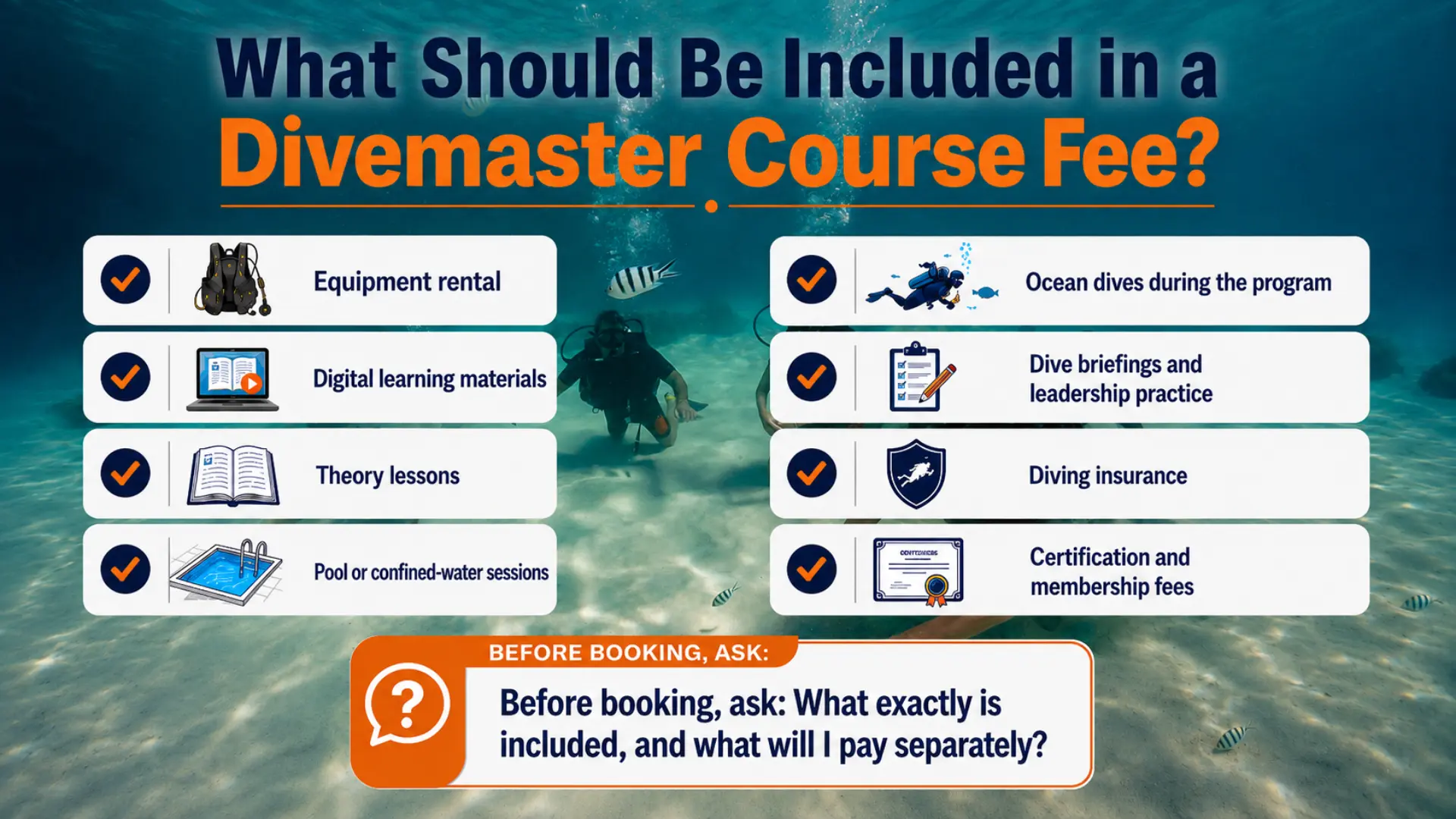
Divemaster course prices can vary significantly between dive schools in Koh Tao. While some schools offer all-inclusive packages, others may charge separately for items such as certification fees, digital learning materials, equipment rental, diving insurance, or professional membership fees.
This is why it’s important to look beyond the advertised course fee and understand exactly what you’re paying for before enrolling.
The following items are commonly included in many Divemaster training packages:
Common Included Item | Why It Matters |
Equipment rental | Reduces the need to purchase expensive dive gear during training |
Education materials | Prevents unexpected learning material or e-learning fees |
Theory lessons | Builds professional-level diving knowledge and understanding |
Pool or confined-water sessions | Provides a controlled environment to practise skills and demonstrations |
Ocean dives during the program | Allows students to gain real-world diving experience and confidence |
Dive briefings and leadership practice | Develops the skills required to supervise and assist certified divers |
Diving insurance | Provides coverage during professional-level training activities |
Certification and membership fees | Helps avoid additional costs at the end of the course |
So, one of the most useful questions you can ask before booking is:
“What exactly is included in the Divemaster course price, and what costs will I need to pay separately?”
Getting a clear answer upfront can help you compare training options accurately, avoid unexpected expenses, and choose the course that offers the best overall value rather than simply the lowest advertised price.
Detailed Divemaster Training Cost Breakdown
Your total budget for the complete cost of Divemaster training in Koh Tao will depend on where you stay, how you eat, whether you purchase dive equipment, and the additional expenses that come with living on the island for several weeks.
Here’s a realistic breakdown of the major costs most Divemaster candidates should expect.
Divemaster Course Fee
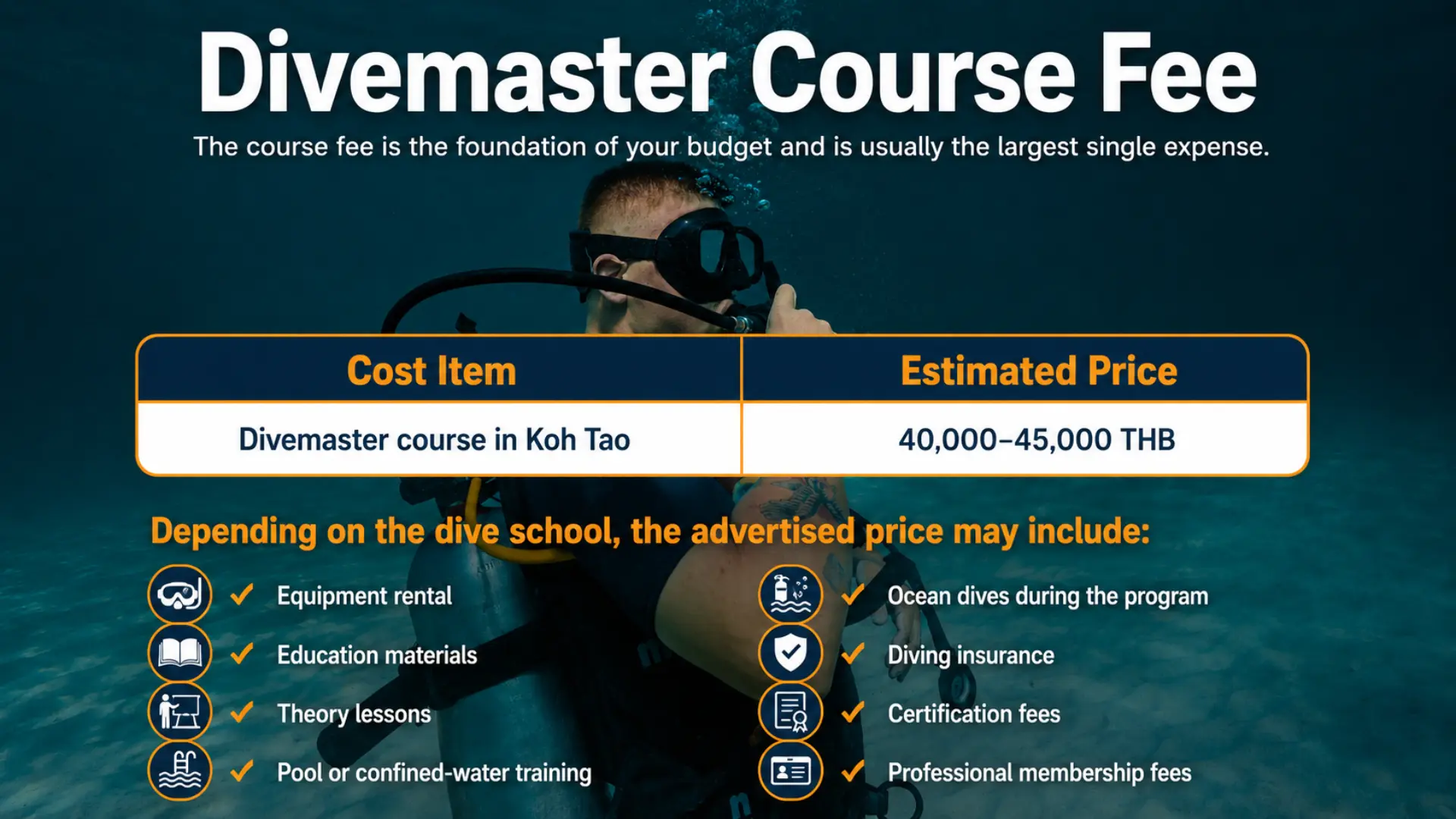
The course fee is the foundation of your budget and is usually the largest single expense.
Cost Item | Estimated Price |
Divemaster course in Koh Tao | 40,000–45,000 THB |
Depending on the dive school, the advertised price may include:
- Equipment rental
- Education materials
- Theory lessons
- Pool or confined-water training
- Ocean dives during the program
- Diving insurance
- Certification fees
- Professional membership fees
Accommodation Costs
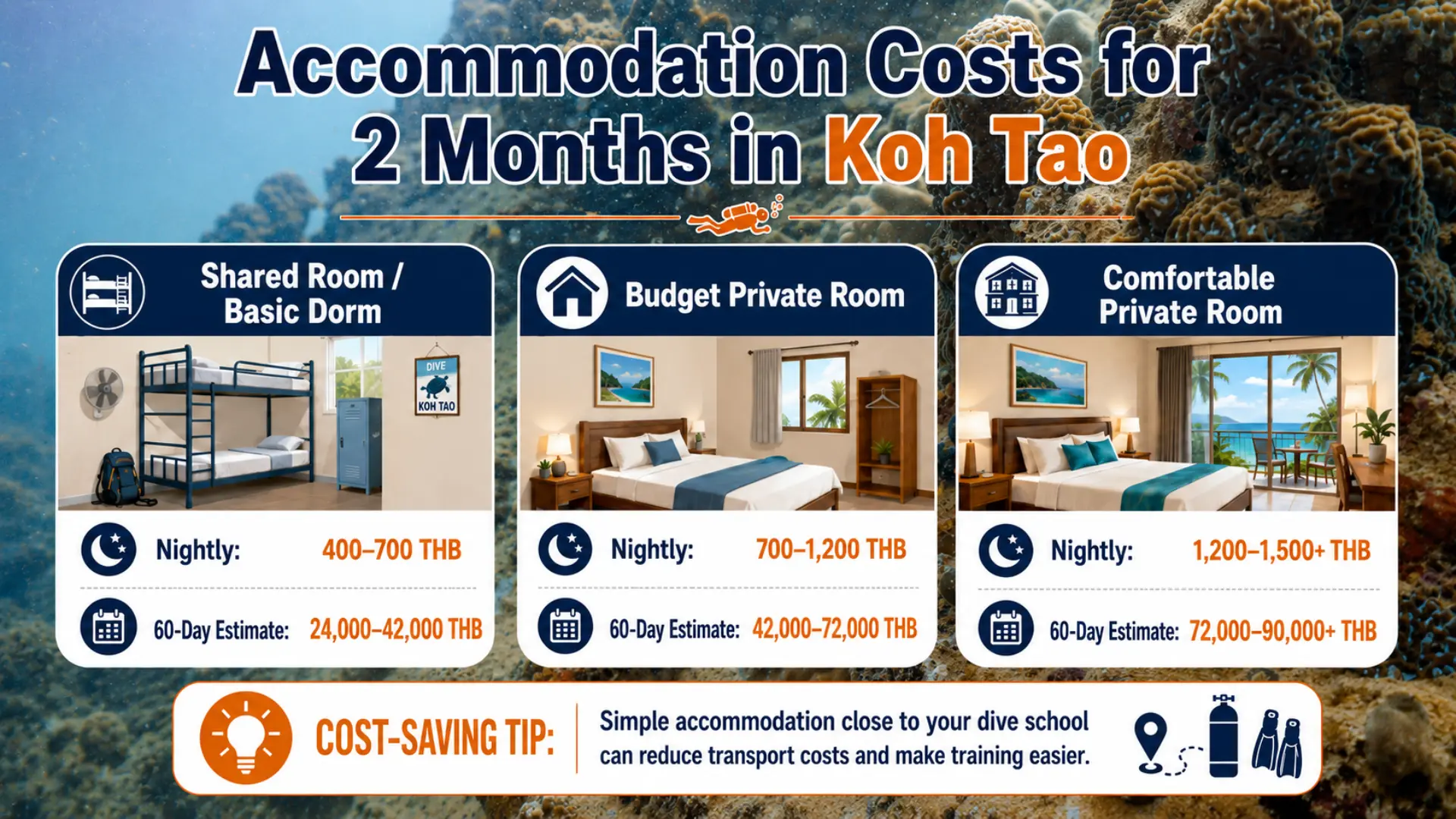
Accommodation is typically the second-largest expense during Divemaster training. Since most programs take between six and eight weeks to complete, your choice of housing can have a major impact on your overall budget.
Accommodation Type | Estimated Nightly Cost | 60-Day Estimate |
Shared room or basic dorm | 400–700 THB | 24,000–42,000 THB |
Budget private room | 700–1,200 THB | 42,000–72,000 THB |
Comfortable private room | 1,200–1,500+ THB | 72,000–90,000+ THB |
NOTE: If your goal is to keep costs under control, choosing simple accommodation close to your dive school is often the smartest option.
Food and Daily Living Expenses
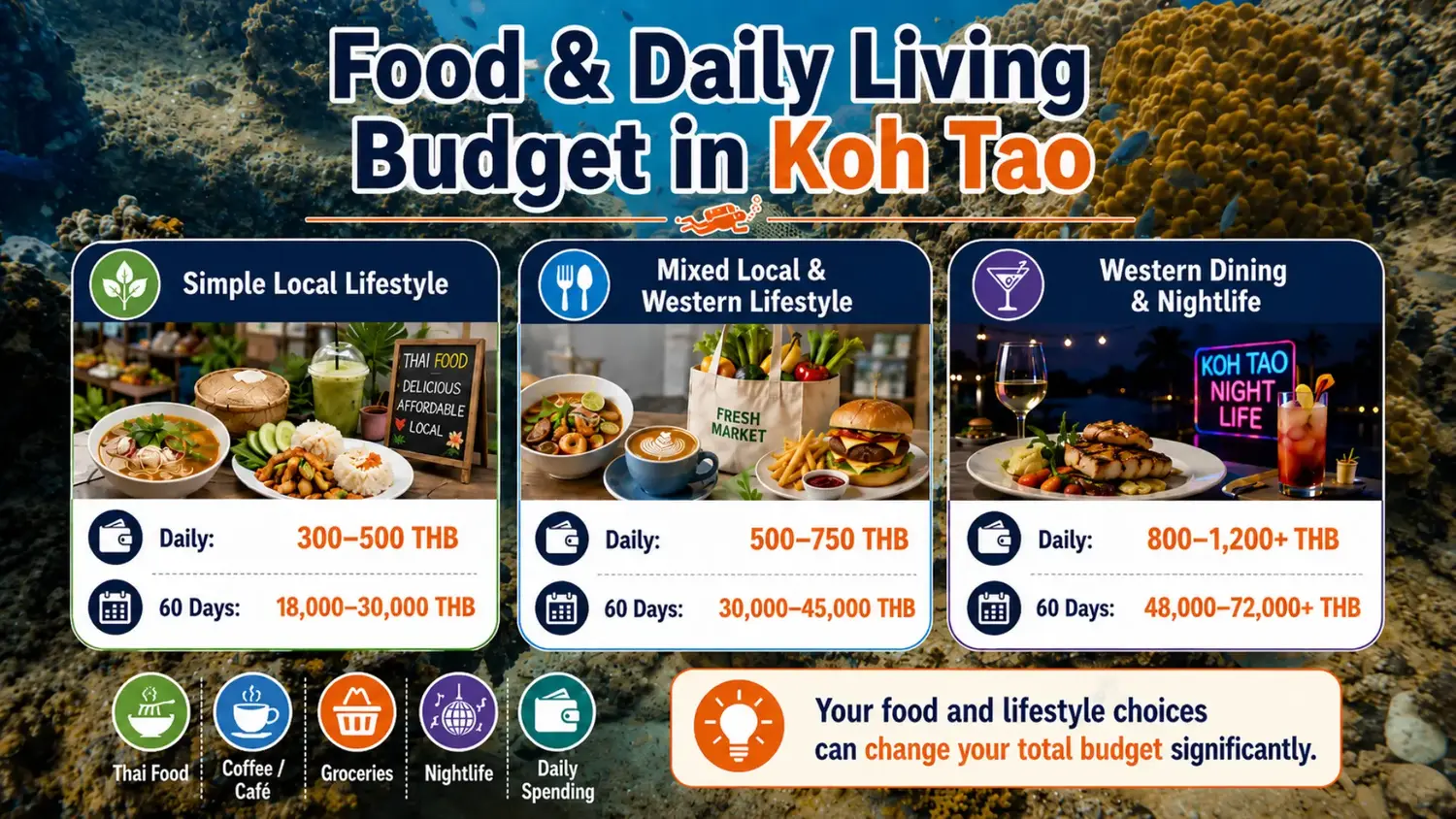
Daily lifestyle choices can significantly affect your overall budget.
Lifestyle Type | Daily Estimate | 60-Day Estimate |
Local Thai food and a simple lifestyle | 300–500 THB | 18,000–30,000 THB |
A mix of local and Western food | 500–750 THB | 30,000–45,000 THB |
Regular Western dining and nightlife | 800–1,200+ THB | 48,000–72,000+ THB |
Dive Equipment Costs
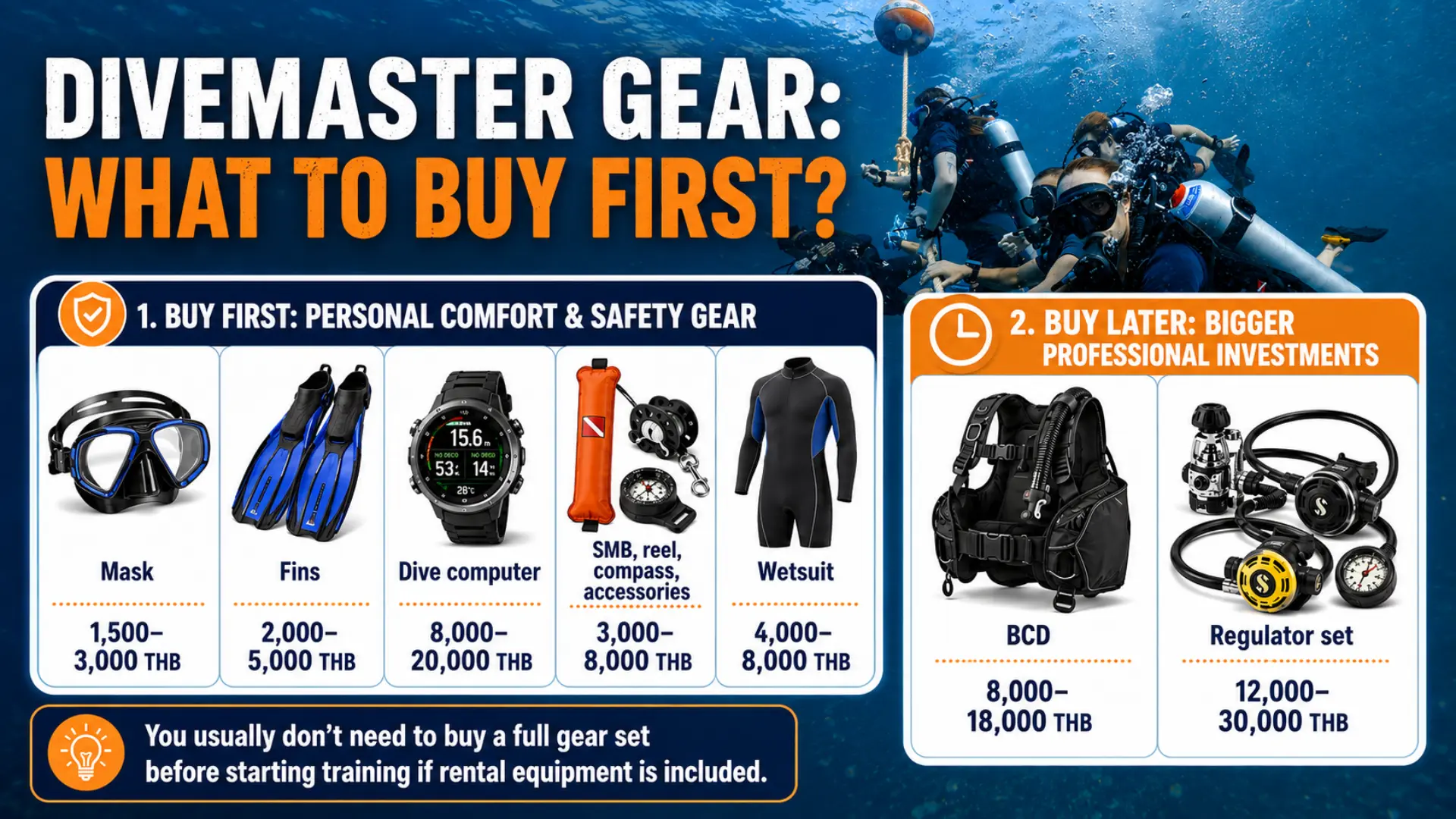
Purchasing professional dive equipment is optional for many candidates during training. Some dive schools provide rental equipment throughout the course, while others may charge separately.
However, divers planning to work professionally after certification often begin investing in their own gear during or shortly after the program.
Equipment | Estimated Cost |
Mask and snorkel | 1,500–3,000 THB |
Fins | 2,000–5,000 THB |
Wetsuit | 4,000–8,000 THB |
Dive computer | 8,000–20,000 THB |
SMB, reel, compass, accessories | 3,000–8,000 THB |
BCD | 8,000–18,000 THB |
Regulator set | 12,000–30,000 THB |
SUGGESTION: A practical strategy is to purchase personal comfort and safety equipment first, such as:
- Mask
- Fins
- Dive computer
- SMB
- Compass
- Wetsuit
Larger investments such as a BCD or regulator can often wait until you have more experience and a clearer idea of the type of diving career you want to pursue.
Visa, Insurance, Medical, and Miscellaneous Costs
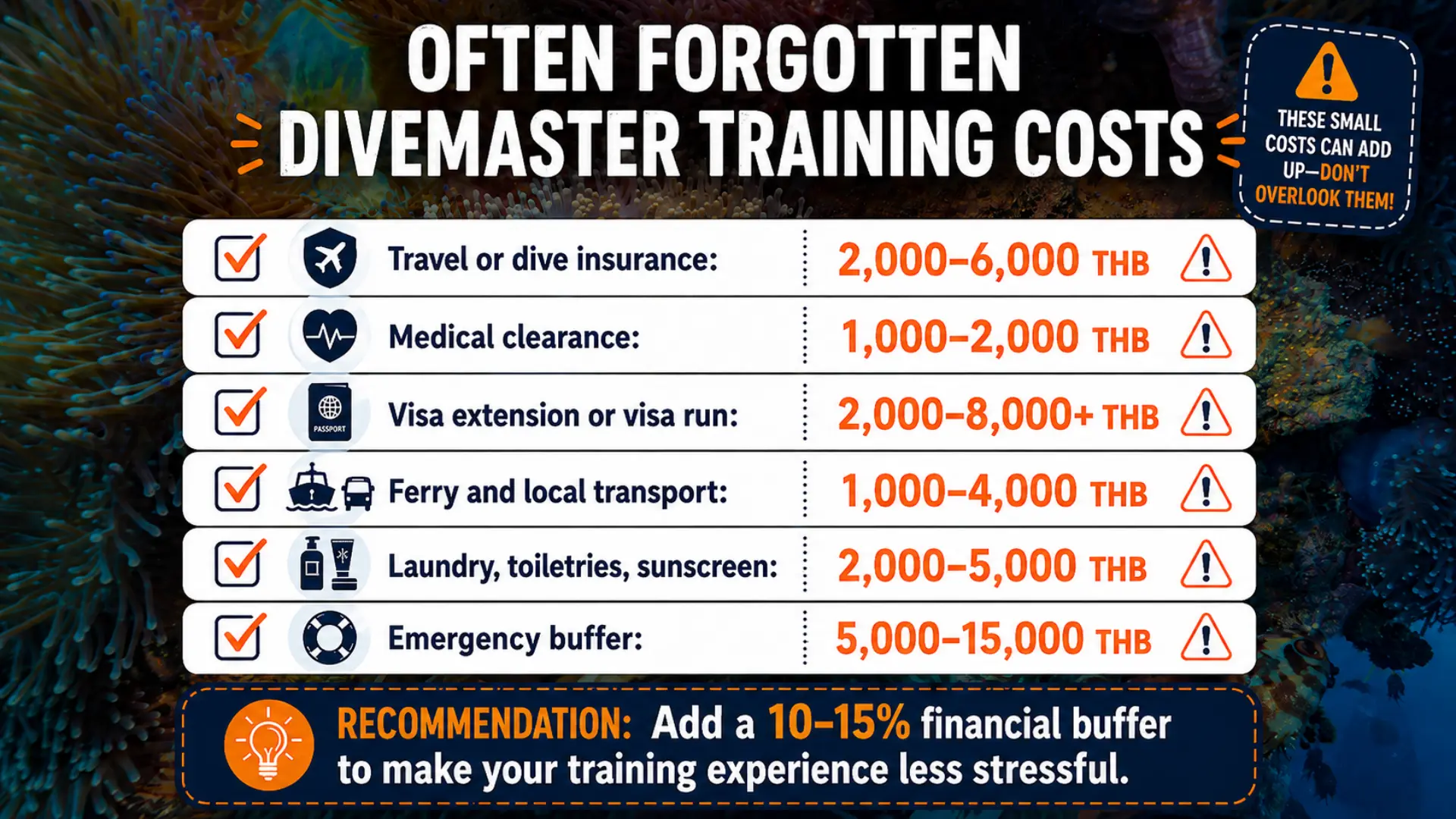
While the following individual costs may seem minor, together they can add a significant amount to your overall budget.
Extra Cost | Estimated Budget |
Travel or dive insurance | 2,000–6,000 THB |
Medical clearance | 1,000–2,000 THB |
Visa extension or visa run | 2,000–8,000+ THB |
Ferry and local transport | 1,000–4,000 THB |
Laundry, toiletries, sunscreen | 2,000–5,000 THB |
Emergency buffer | 5,000–15,000 THB |
NOTE: Koh Tao remains one of the most affordable places in the world to complete professional scuba diving training, but having a realistic financial buffer of atleast 10–15% of your total budget will make the experience significantly less stressful and allow you to focus fully on your development as a dive professional.
Budget Examples:
The examples below provide realistic budget scenarios for different types of Divemaster candidates and can help you estimate the level of investment required for a typical two-month training period.
Student Type | Course Fee | Living Costs | Gear Budget | Total Estimate |
Budget trainee | 40,000–45,000 THB | 40,000–55,000 THB | 0–10,000 THB | 80,000–105,000 THB |
Comfortable trainee | 40,000–45,000 THB | 60,000–85,000 THB | 10,000–25,000 THB | 110,000–150,000 THB |
Future working professional | 40,000–45,000 THB | 70,000–95,000 THB | 25,000–50,000+ THB | 135,000–185,000+ THB |
What Does Divemaster Training Actually Involve?
A Divemaster is the first professional-level certification in recreational scuba diving and marks the transition from being a recreational diver to taking on leadership responsibilities within the diving industry.
Certified Divemasters are trained to:
- Guide certified divers during recreational dives
- Conduct dive briefings and site orientations
- Assist instructors during training courses
- Support students who may be nervous or require additional guidance
- Help manage dive equipment and daily dive operations
- Supervise groups underwater
- Assist with rescue scenarios and emergency preparedness
- Promote safe and responsible diving practices
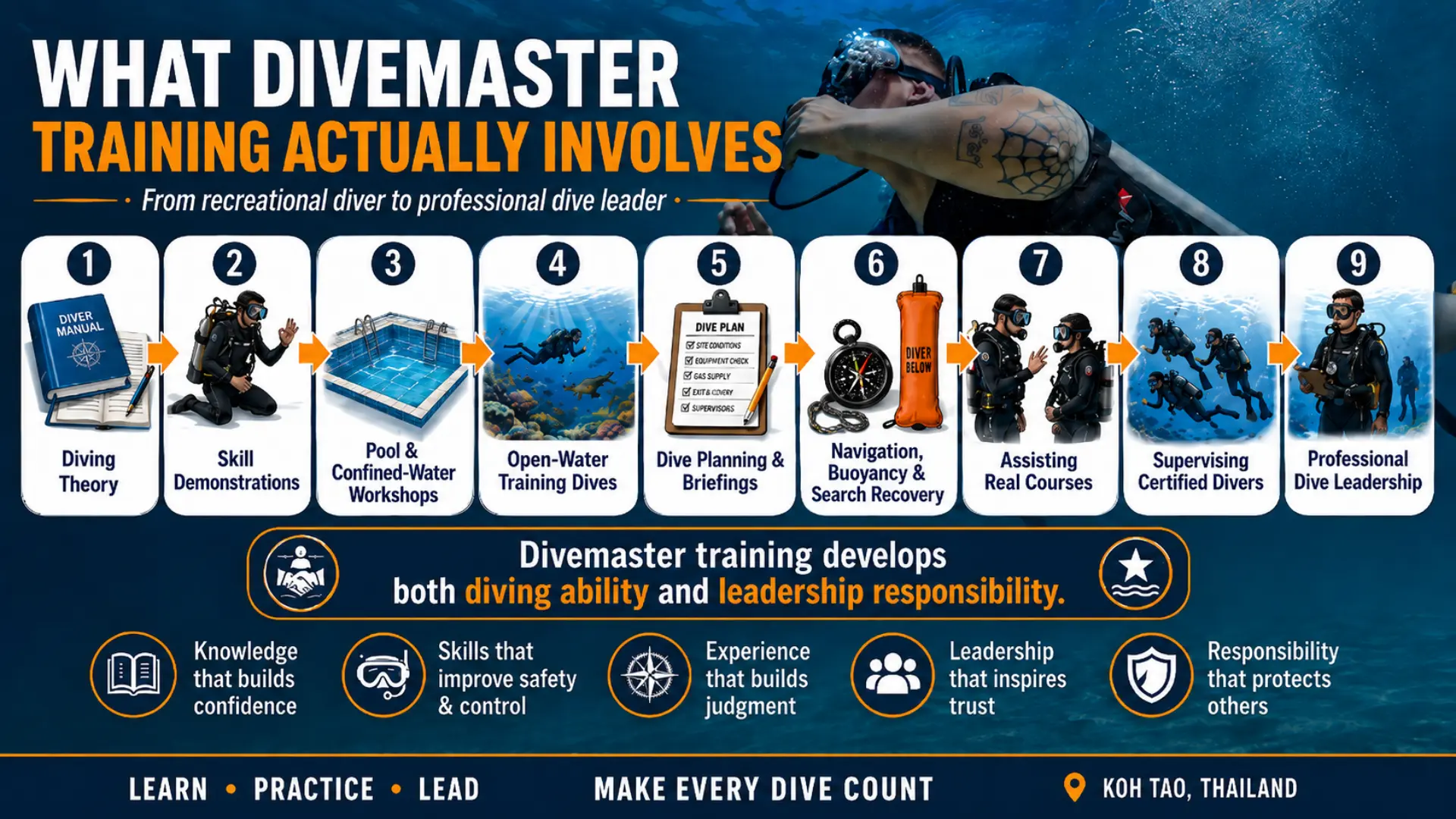
Divemaster training is designed to develop both diving skills and leadership abilities. Throughout the program, candidates typically participate in:
- Diving theory and knowledge development
- Confined-water skill workshops
- Open-water training dives
- Dive planning and dive briefing exercises
- Underwater navigation training
- Buoyancy and trim workshops
- Search and recovery exercises
- Lift bag deployment
- Knot-tying and practical dive skills
- Assisting instructors during real recreational diving courses
- Supervising and interacting with certified divers
Unlike recreational scuba courses, which focus primarily on personal diving skills, Divemaster training prepares candidates to take responsibility for other divers and contribute to the day-to-day operation of a professional dive centre.
For many divers, it is the first step toward a career in the scuba diving industry and provides the experience, confidence, and leadership skills needed to work in dive centres around the world.
Divemaster Course Prerequisites
Before enrolling in a Divemaster program, you’ll need to meet certain prerequisites. While the exact requirements may vary slightly between training agencies, most professional-level scuba diving programs have similar entry standards.
The purpose of these requirements is to ensure that candidates already possess the diving experience, safety knowledge, and rescue skills needed to begin professional training.
Requirement Area | Typical Expectation |
Minimum age | 18 years old |
Advanced-level certification | Usually required before starting Divemaster training |
Rescue Diver certification | Required before certification and often before enrollment |
First Aid & CPR training | Must be completed within the previous 24 months |
Medical clearance | Medical questionnaire and, where applicable, physician approval |
Logged dives to start training | Commonly around 40 logged dives |
Logged dives for certification | Commonly around 60 logged dives |
NOTE: In addition to these requirements, many dive professionals choose to complete speciality courses for Enriched Air Nitrox (EANx) and Deep Diving before or during their Divemaster training. While these are not always mandatory, they can strengthen a diver’s knowledge, experience, and future employment opportunities.
Return on Investment – Is Divemaster Training in Koh Tao Worth It?
While the initial cost of Divemaster training in Koh Tao may seem substantial, it’s an investment in a career that can take you worldwide. Qualified divemasters earn ฿1,500-3,000 per day in Thailand, with higher rates in premium destinations. Many recover their training investment within 6-12 months of professional work.
Career Progression Opportunities
- Dive Guide: 1,500-2,500 THB per day in Thailand
- Further Instructor Training: 4,000-8,000 THB per day potential
- International Opportunities: Higher rates in Maldives, Red Sea, Caribbean – explore liveaboard work opportunities
- Specialty Services: Marine biology specialization, underwater photography, conservation work
- Advanced Certifications: Nitrox certification advantages for professional development
If you’re ready to become a dive professional, La Bombona Diving in Koh Tao offers a comprehensive 2-month RAID Divemaster program that includes unlimited training dives, equipment rental, digital learning materials, insurance, certification and membership fees, and hands-on experience assisting real courses. Combined with small training groups and personalised mentorship from experienced instructors, it provides an excellent environment to build the skills and confidence needed for a successful career in diving.
Frequently Asked Questions (FAQs)
 EN
EN  ES
ES