

Main Points
- Koh Tao is home to a variety of jellyfish species, including the harmless Rhizostome and the more dangerous Box jellyfish.
- The best time to spot jellyfish is during the rainy season, from November to January, when they are most abundant.
- Jellyfish prefer warm, shallow waters and are often found near the coastlines of Koh Tao.
- Dive operators always carry vinegar on their boats to treat jellyfish stings.
- They are not as dangerous as you may think, and they’re not too common around Koh Tao.
- Koh Tao has fewer confirmed box jellyfish incidents than nearby Koh Samui and Koh Phangan, despite its busy diving and snorkelling scene.
- No jellyfish is safe to touch, even if it is dead or washed ashore. Some can still sting for hours.
Jellyfish Koh Tao: A Guide for Adventurous Island Visitors
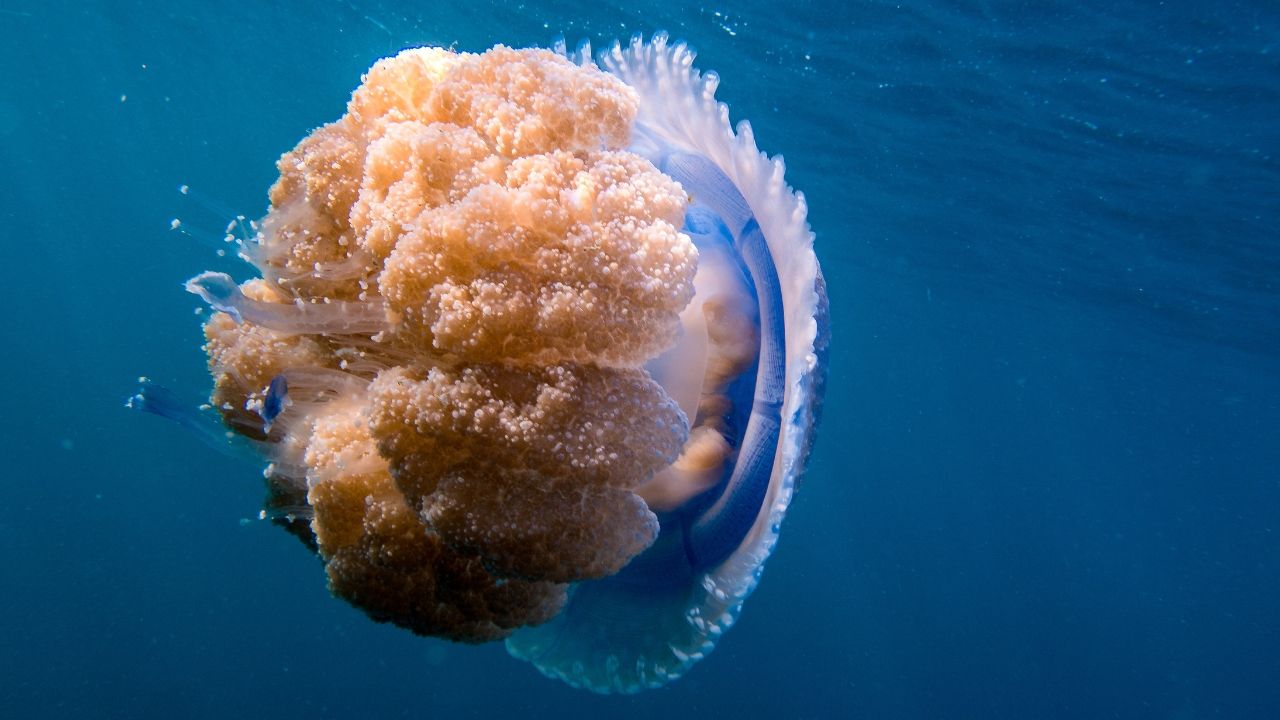
Welcome to Koh Tao, a tropical paradise known for its beautiful beaches and vibrant marine life. If you’re planning a visit, you might be wondering about the jellyfish that live in these waters. Allow me to guide you through everything you need to know to make your trip both thrilling and safe.
Getting to Know the Jellyfish of Koh Tao
Home to a variety of jellyfish species, Koh Tao, located in the Gulf of Thailand, is a haven for these fascinating creatures. They can be found in the waters around the island, adding an element of intrigue and beauty to your underwater explorations. Knowing what types of jellyfish you may come across is key to ensuring your safety.
Jellyfish in Thailand vs. Jellyfish in Koh Tao: What’s the Difference
Before looking at the species found around Koh Tao, it’s useful to understand how the island compares with other destinations in Thailand.
Jellyfish in Thailand | Jellyfish in Koh Tao |
Covers the entire country, including both coasts. | Focuses only on Koh Tao and nearby waters. |
Includes many species such as moon jellyfish, sea nettles, box jellyfish, Portuguese man of war, and seasonal blooms. | Most encounters are harmless jellyfish, but box jellyfish and other species are occasionally reported. |
Jellyfish seasons vary by region because the Gulf of Thailand and Andaman Sea have different monsoon patterns. | Jellyfish activity is influenced by Koh Tao’s local weather, rainfall, currents, and plankton blooms. |
Safety advice is broad and intended for all Thai beaches and islands. | Advice is tailored to Koh Tao’s beaches, dive sites, snorkeling spots, and local warning systems. |
Includes destinations such as Phuket, Krabi, Koh Samui, Hua Hin, Pattaya, and Koh Chang. | Covers only Koh Tao’s marine environment. |
Risk levels differ from one destination to another. Some areas experience more seasonal blooms than others. | Risk changes throughout the year. Conditions can vary from week to week depending on weather and currents. |
Information is general and suitable for travellers planning a trip anywhere in Thailand. | Information is specific to divers, snorkellers, and beachgoers visiting Koh Tao. |
Medical facilities and warning systems vary between destinations. | Visitors can check with local dive centres and beach operators for the latest conditions before entering the water. |
News reports may describe incidents from one region that don’t reflect conditions nationwide. | Local conditions are a better indicator of jellyfish activity than reports from other parts of Thailand. |
When Jellyfish Are Most Likely to Be Seen
From November to January, the rainy season in Koh Tao, jellyfish are more likely to be seen. The increased rainfall and shifting ocean currents during this time bring jellyfish closer to the shore. While this might seem scary, knowing what to expect and how to handle it can make a big difference. For more information, you can learn about the box jellyfish and its characteristics.
Getting to Know the Jellyfish: Their Behavior and Habitat
They have been around for millions of years, and they are absolutely fascinating. Jellyfish are often found in the warm, shallow waters near the coast in Koh Tao. They float with the currents, capturing prey with their tentacles. Because jellyfish are attracted to areas where there is plenty of food, you might see them near coral reefs and other marine environments that are rich in life.
Meet the Jellyfish of Koh Tao
Get to know the various jellyfish species you could come across while in Koh Tao. Every species is unique and has its own behaviors and characteristics, which make them fascinating, and in some cases, hazardous.
- Rhizostome Jellyfish: They are known to be gentle and their stings are harmless.
- Box Jellyfish: They are notorious for their potent venom and require caution.
- Lion’s Mane Jellyfish: They are easily identified by their striking look and numerous tentacles.
Knowing about these jellyfish will help you understand their part in the ecosystem and make your visit safe and unforgettable.
Rhizostome Jellyfish: The Peaceful Wanderers
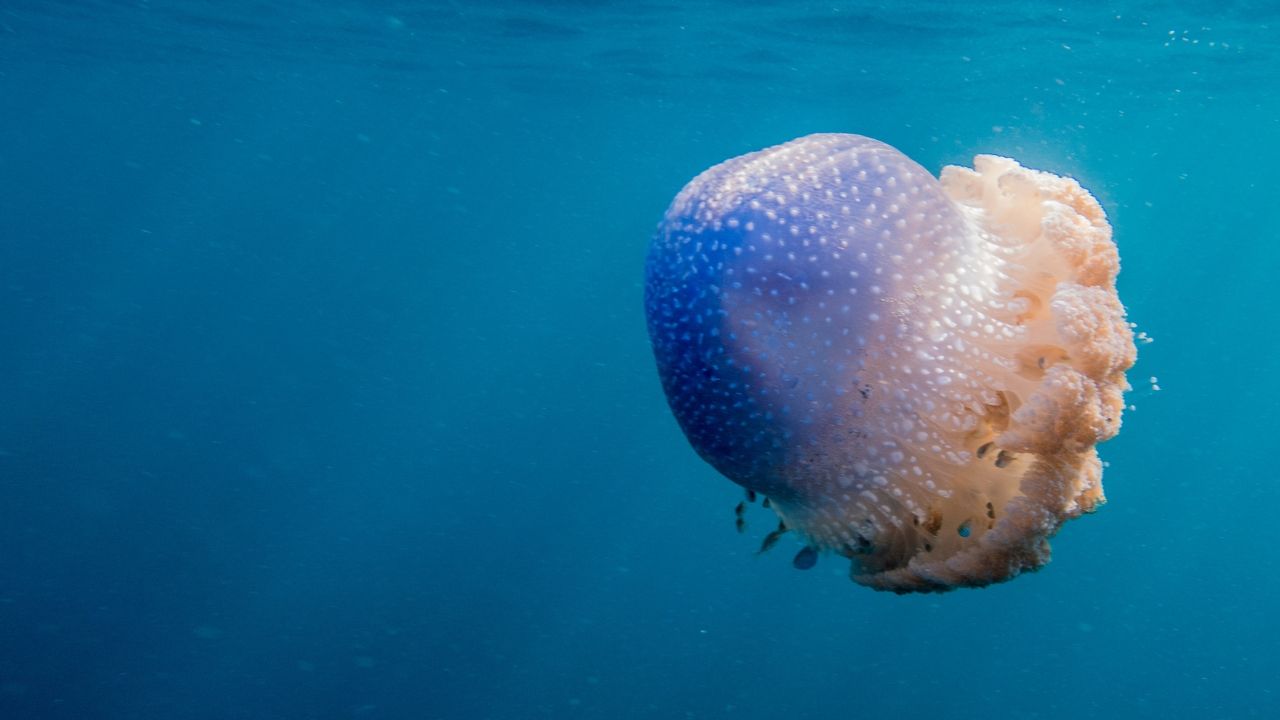
Rhizostome jellyfish are some of the most frequently seen species in the waters around Koh Tao. These peaceful wanderers are typically harmless to humans, making them a popular sight for snorkelers and divers. With their squishy, jelly-like bodies and weak stings, they are more intriguing than dangerous.
Box Jellyfish: The Venomous Sea Creatures
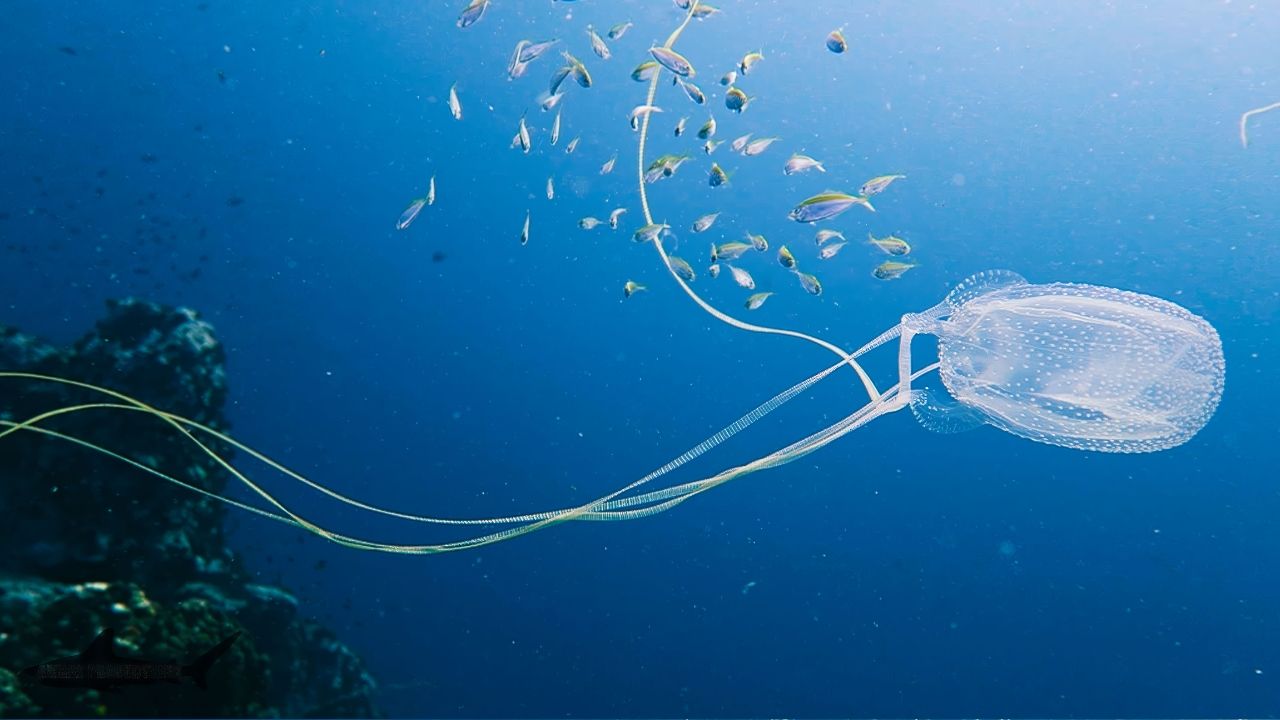
Box jellyfish are a whole different ball game. They are known for their deadly venom and should be treated with care and respect. If you plan to go into the waters around Koh Tao, it’s important to know how to spot them and stay clear.
- Identify them by their box-shaped bell and long tentacles that trail behind them.
- Always swim with a friend and stay up-to-date on local jellyfish warnings.
- Have a plan for first aid treatment for jellyfish stings – vinegar is a common treatment.
Knowledge and preparation can change a run-in with a Box jellyfish from a possible danger to an educational opportunity. It’s important to note that Box jellyfish are rare around Koh Tao and they are not as dangerous as their Australian cousins. They still pack a punch!
Meet the Lion’s Mane Jellyfish: A Mesmerizing Sea Spectacle
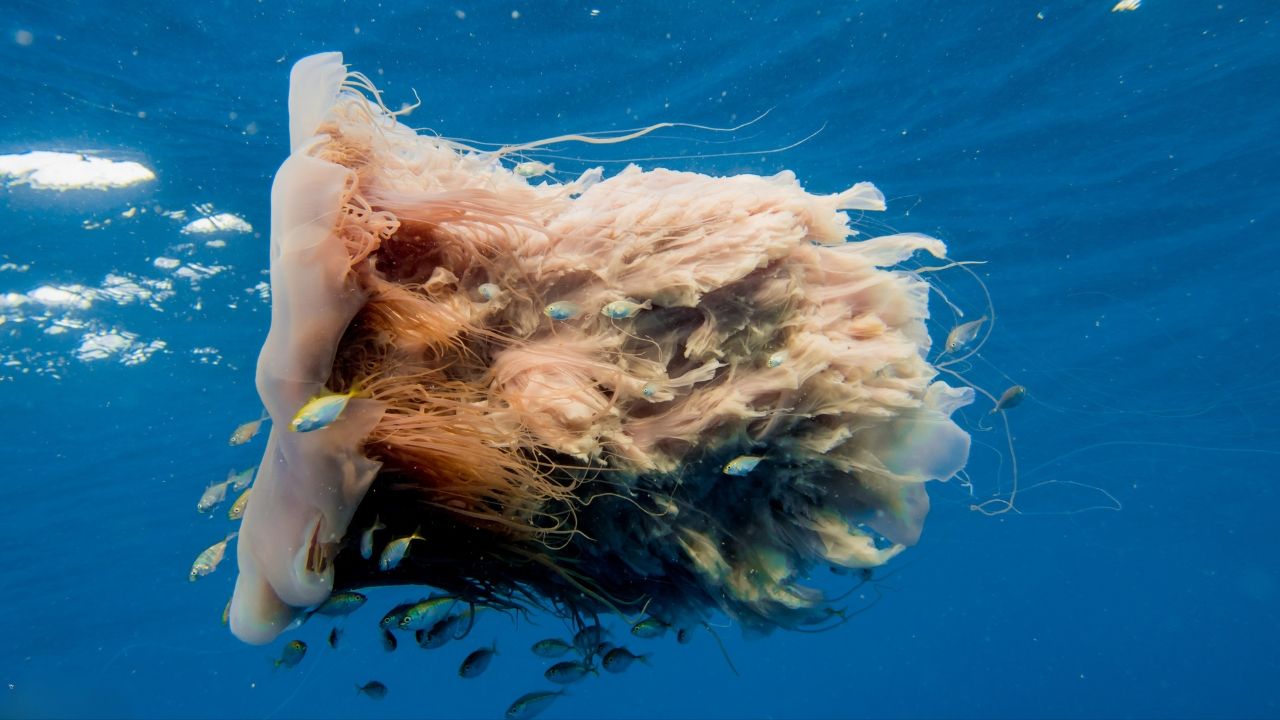
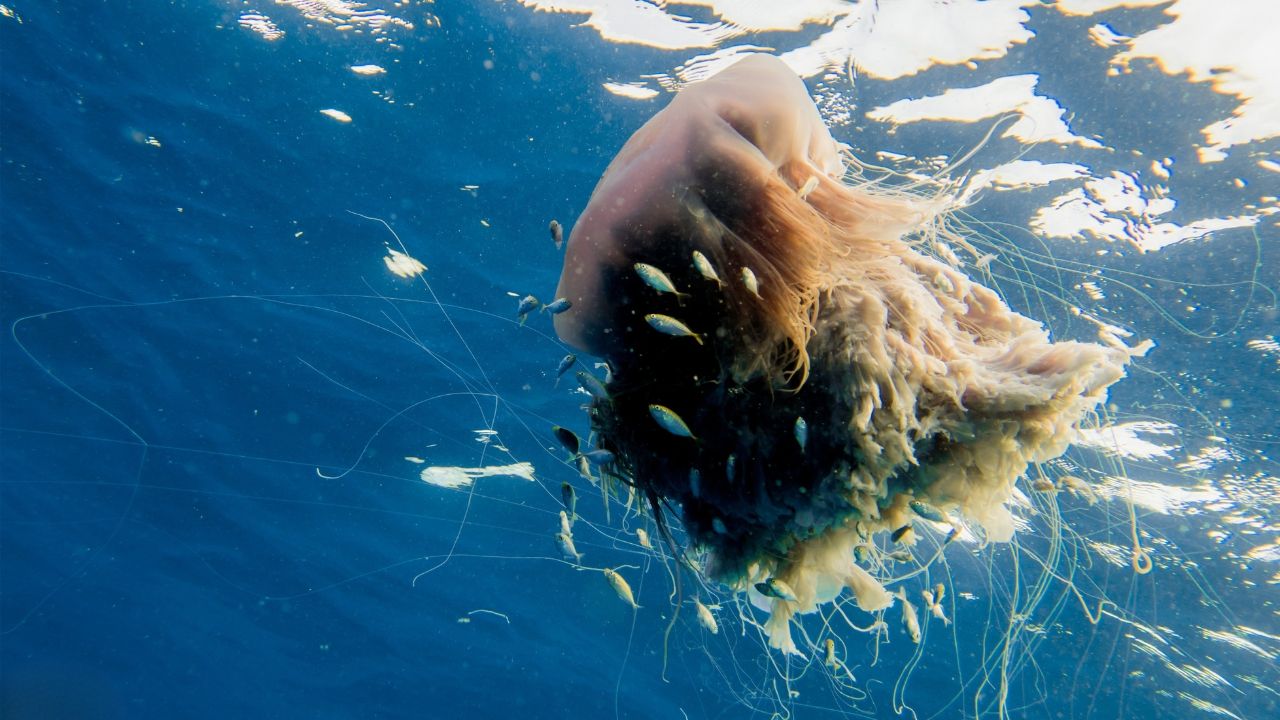
One of the most awe-inspiring species you could come across in Koh Tao is the Lion’s Mane jellyfish. As their name suggests, these jellyfish are recognized for their lengthy, cascading tentacles that mimic the mane of a lion. Their radiant hues and elegant motion make them a marvel to observe, but it’s crucial to appreciate them from afar.
Although Lion’s Mane jellyfish are beautiful, their sting can be quite painful. They capture their prey, which can include small fish and plankton, using their tentacles. If you see one while snorkeling or diving, it’s a good idea to observe it from a distance and avoid touching its tentacles.
Which Jellyfish Are Safe to Touch
The short answer is none. It is one of the most common questions visitors ask, but the safest approach is to avoid touching any jellyfish.
Jellyfish You Can Safely Handle (Sort Of)
Moon jellyfish are the closest thing to a “safe” jellyfish. Their stinging cells are usually too weak to penetrate human skin. This is why they are often used in touch tanks at aquariums.
However, that does not mean they are completely safe. People with sensitive skin, small cuts, or repeated contact may still experience mild irritation. It is more accurate to describe them as low risk rather than safe to touch.
Jellyfish You Should Never Touch, Even If They Are Dead
Never touch a box jellyfish. Its tentacles can still release venom for hours after the jellyfish has died or washed onto the beach.
The same advice applies to any jellyfish you cannot identify. If you or your children find one on the beach, leave it where it is. Do not try to move it with your hands.
If necessary, tell a lifeguard, beach staff member, or your dive centre so they can deal with it safely.
Tips for Safety and Interaction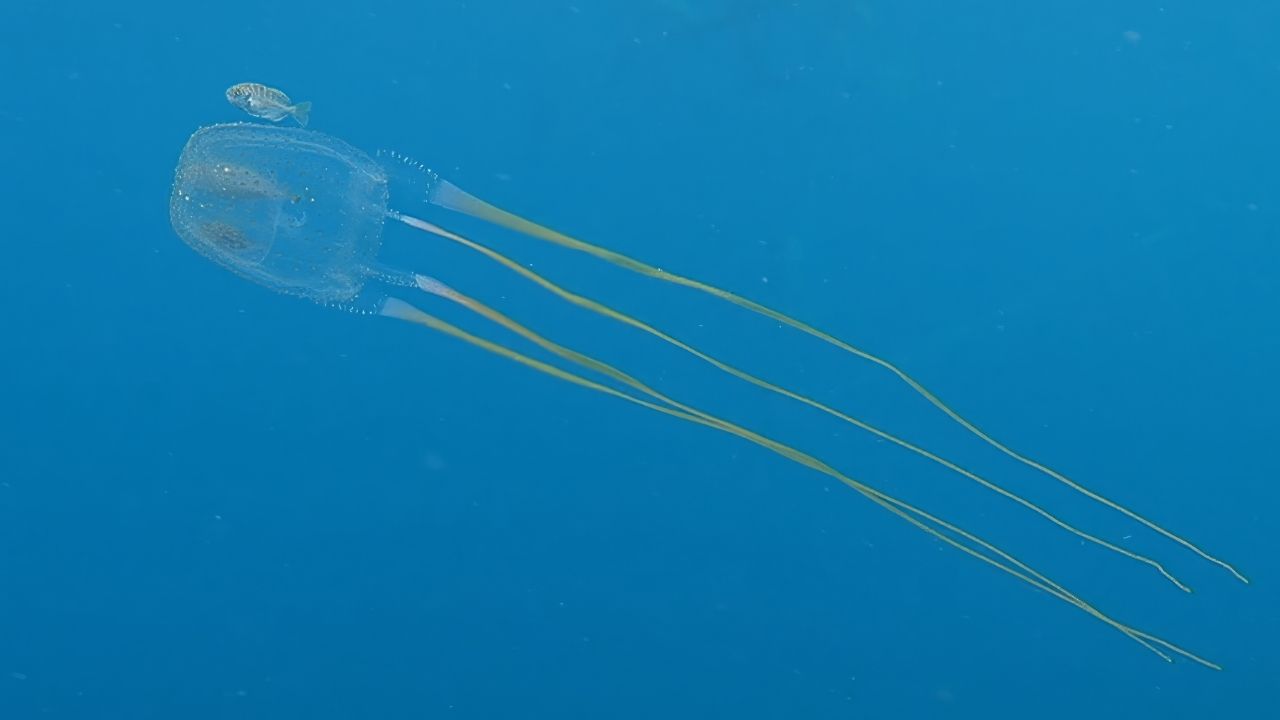
Meeting jellyfish in Koh Tao’s waters can be a thrilling experience, but safety must come first. Following a few simple rules can help you avoid any nasty shocks and make the most of your underwater exploits.
What to Do If You Come Across a Jellyfish
If you happen to encounter a jellyfish while swimming or snorkeling, stay calm and observe their beauty. Gradually retreat a couple of metres and give the jellyfish a wide berth. Above all, do not try to touch or engage with the jellyfish, as even non-threatening species can give a mild sting. If you’re interested in learning more about marine life, check out the other marine life in Koh Tao.
Jellyfish Sting Severity Chart: Mild, Moderate, Dangerous
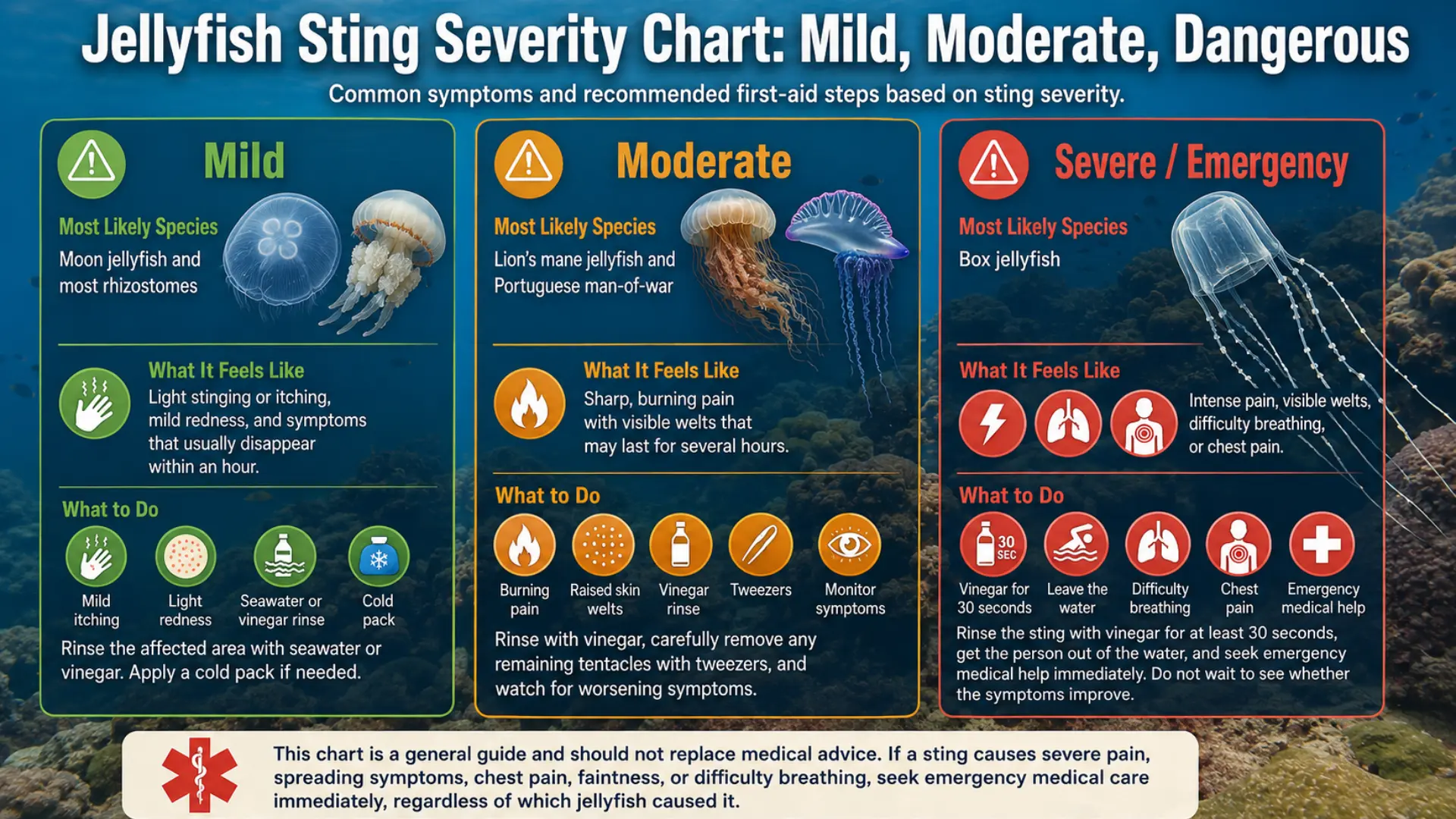
This chart explains what you may experience and the first aid recommended for each level of severity.
Severity | Most Likely Species | What it Feels Like | What to do |
Mild | Moon jellyfish, most rhizostomes | Light stinging or itching, mild redness, and symptoms usually disappear within an hour. | Rinse the area with seawater or vinegar. Apply a cold pack if needed. |
Moderate | Lion’s mane, Portuguese man-of-war | Sharp, burning pain with visible welts that can last for several hours. | Rinse with vinegar, remove any tentacles with tweezers, and watch for worsening symptoms. |
Severe / Emergency | Box jellyfish | Intense pain, visible welts, difficulty breathing, or chest pain. | Rinse with vinegar for at least 30 seconds, get out of the water, and seek emergency medical help immediately. Do not wait to see if the symptoms improve. |
NOTE: This chart is a general guide and should not replace medical advice. If a sting causes severe pain, spreading symptoms, or difficulty breathing, seek emergency medical care immediately, regardless of which jellyfish caused it. |
How to Prepare for and Handle Jellyfish Stings
Being prepared is crucial when it comes to jellyfish encounters. Before you jump into the water, make sure you have the necessary tools to deal with a sting. Bring along a small bottle of vinegar, which can help neutralize the venom of some jellyfish stings. All dive boats in Koh Tao carry a bottle of vinegar just in case anyone is stung by a jellyfish.
Keep in mind that knowing about and preparing for jellyfish stings are your best protections.
How to Stay Safe in the Water
Before you embark on your Koh Tao journey, it’s a good idea to get to know the local sea creatures and safety rules. Here are some pointers to help you have a safe and fun time:
- Check local jellyfish alerts and swim in designated safe areas.
- Wear protective clothing, such as a wetsuit or rash guard, to minimize skin exposure.
- Stay informed about the types of jellyfish present in the area and how to identify them.
- Respect the marine environment and avoid touching or disturbing any sea creatures.
Jellyfish Nets and Protected Swimming Areas on Koh Tao
Some nearby islands have installed jellyfish nets to help protect swimmers. Koh Samui and Koh Phangan have dedicated jellyfish nets at several of their busiest beaches following a number of serious stings in previous years. Koh Mak, another island in the Gulf of Thailand, was the first in the country to introduce this type of protection successfully.
Koh Tao does not currently have dedicated anti-jellyfish nets. The island has had relatively few serious incidents, so there has been less need to install them.
Some beaches, such as the northern end of Mae Haad, have marked swimming areas. These are designed to separate swimmers from boat traffic. They help improve safety but are not intended to keep jellyfish out.
Which Koh Tao Beaches Have Net Enclosures?
At the moment, no beach on Koh Tao has a dedicated anti-jellyfish net like those found at Chaweng or Bophut on Koh Samui.
This could change in the future. If a jellyfish net is important for your trip, check with your resort or dive centre before you book. Do not assume that one is available.
What to Ask Your Dive Shop or Resort Before Booking
Before booking a dive or snorkelling trip, consider asking these questions:
- Has there been any jellyfish activity reported this week?
- Do your boats carry vinegar and a jellyfish sting first aid kit?
- Is there a sheltered or shallow area you recommend for anyone worried about jellyfish?
- What is your emergency procedure if a guest is stung during a dive or snorkelling trip?
A good dive operator should be able to answer these questions clearly and confidently. Honest and practical advice is a better sign than vague reassurance.
Jellyfish Around the Gulf of Thailand (Koh Phangan, Koh Samui & Nearby Islands)
If Koh Tao is part of a larger island-hopping trip, it helps to understand how its jellyfish risk compares with nearby islands.
Koh Phangan Jellyfish Activity
Koh Phangan has recorded several serious box jellyfish incidents, including a widely reported child fatality in recent years. Most reports have come from beaches on the island’s eastern and northern coasts.
In response, local authorities have installed jellyfish nets at some beaches and increased public safety warnings. Visitors are advised to pay extra attention during periods when jellyfish activity is more common.
Koh Samui Jellyfish Activity
Koh Samui has recorded more box jellyfish incidents than Koh Tao or Koh Phangan. Reported cases have been concentrated around popular beaches such as Chaweng, Bophut, and Lamai.
Several of these beaches now have jellyfish nets and warning signs to help improve swimmer safety.
How Koh Tao Compares
Although Koh Tao is part of the same island group, it has recorded fewer reported box jellyfish incidents than Koh Phangan and Koh Samui. This is despite the island attracting large numbers of divers and snorkellers every year.
Researchers believe this difference is linked to local environmental conditions and lower numbers of box jellyfish in the area. No single factor fully explains the difference.
If you are travelling between these islands, always check the latest local conditions before entering the water. Follow advice from your dive centre, resort, or local authorities, and remember that jellyfish activity can vary from one island to another.
Conservation Efforts and Awareness
Koh Tao’s vibrant marine ecosystem is a precious resource that requires protection and conservation. As visitors, we have a responsibility to ensure that our actions do not harm the environment or its inhabitants.
Preserving Jellyfish and Their Environment
Local groups and volunteers are working tirelessly to maintain the fragile equilibrium of marine life in Koh Tao. This includes beach cleanups, educational initiatives, and efforts to decrease pollution and safeguard coral reefs.
By getting involved in these conservation activities, you can play a part in maintaining the natural beauty of Koh Tao. Why not take part in a beach cleanup or support local conservation projects during your stay? Your actions can make a big difference to the health and sustainability of the island’s ecosystem.
Let’s keep in mind that every little effort matters when it comes to ensuring that future generations can enjoy the marvels of the sea.
Teaching Visitors and Locals to Care for the Environment
Education can go a long way in instilling a sense of duty to protect the environment. In Koh Tao, there are many efforts to teach both tourists and residents about the importance of protecting marine life. Dive centers and local groups frequently hold classes and talks on marine conservation, emphasizing the role of jellyfish and other marine animals in the ecosystem.
Not only do these programs raise awareness, but they also promote sustainable tourism practices. By understanding the local marine environment, tourists can make decisions that will help protect the delicate balance of life in the waters of Koh Tao. Participating in educational activities is a rewarding way to improve your travel experience while making a positive contribution to the island’s future.
Frequently Asked Questions (FAQs)
 EN
EN  ES
ES